 Save
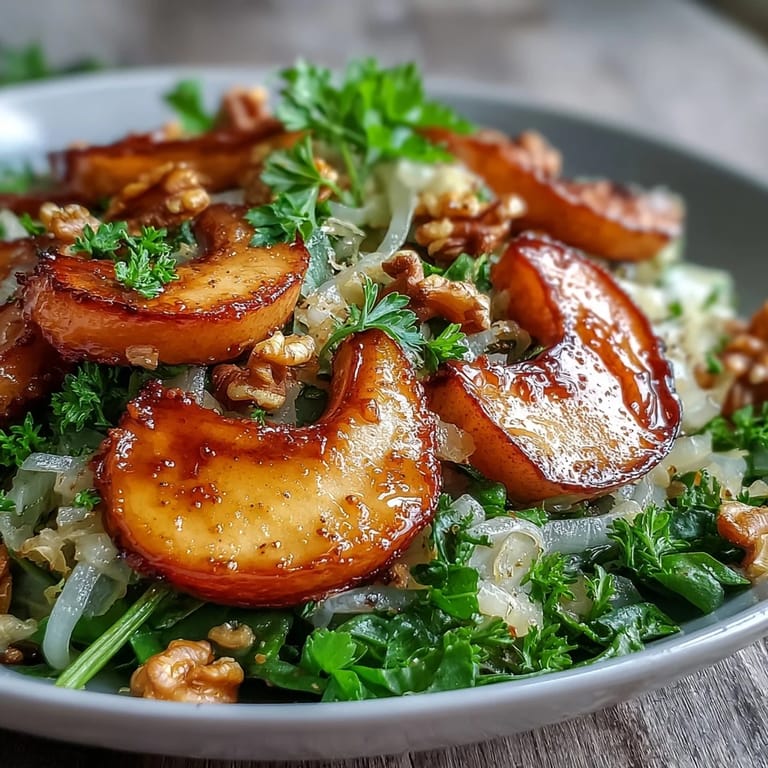
Save My neighbor brought over a jar of homemade sauerkraut one autumn evening, and I'll admit, I was skeptical at first. She insisted it needed to be warm, wilted into something tender with apples, and I remember thinking how odd that sounded until the first bite hit my tongue—that perfect clash of tangy, sweet, and nutty all at once. Now whenever I see apples at the market, this skillet finds its way into my rotation, and I always end up making extra because people actually ask for it.
Last winter I made this for a potluck where everyone brought heavy casseroles, and watching people go back for thirds of this warm, bright skillet salad was oddly satisfying—like I'd cracked some small kitchen code. One guest asked if it was traditional German, another wanted the recipe immediately, and someone else just kept calling it genius without making eye contact. That's when I knew this wasn't just a side dish, it was a conversation starter.
Ingredients
- 2 large apples (Honeycrisp or Gala): These varieties hold their shape while caramelizing and bring natural sweetness without being cloying—avoid mealy apples that collapse into mush.
- 1 small red onion: The thin slices mellow as they cook, adding subtle bite and gorgeous color that makes the whole dish pop.
- 2 cups sauerkraut, drained: This is your probiotic anchor and the tangy counterpoint to everything sweet; don't skip draining or you'll end up with a watery mess.
- 2 cups baby spinach or arugula: These wilt gently at the end, adding fresh earthiness and keeping the dish from feeling too cooked-down.
- 2 tbsp olive oil or unsalted butter: Butter adds richness if you're serving warm; olive oil keeps it lighter and works beautifully at room temperature.
- 1/4 tsp freshly ground black pepper, 1/4 tsp sea salt: Taste as you go—sauerkraut brings its own saltiness, so adjust mindfully to avoid oversalting.
- 1/4 tsp ground caraway seeds (optional): If you use these, toast them lightly first to wake up their flavor; they're a traditional German touch but optional if you prefer a cleaner taste.
- 1 tsp honey or maple syrup: This tiny amount of liquid sweetness bridges the gap between the sour and the savory without making anything taste like dessert.
- 1/4 cup toasted walnuts or pecans, chopped: Toast them yourself if you have time—the smell alone makes this worth it, and they add textural contrast that matters.
- 2 tbsp fresh parsley: Chop it just before serving to keep it bright and vibrant-looking on the plate.
Tired of Takeout? 🥡
Get 10 meals you can make faster than delivery arrives. Seriously.
One email. No spam. Unsubscribe anytime.
Instructions
- Warm Your Pan and Start the Caramelization:
- Heat your oil or butter over medium heat until it's shimmering but not smoking—you'll know it's ready when it releases that rich, buttery aroma into your kitchen. This takes about a minute, and you'll feel the heat difference when you hold your hand above the pan.
- Sauté the Apples and Onions:
- Add your sliced apples and onions and let them cook undisturbed for a minute or two before stirring, which lets them develop those golden, caramelized edges. Stir occasionally for 6 to 8 minutes total—you're looking for the apples to turn translucent and the onions to soften completely, which is when you know the magic is happening.
- Add Sweetness and Seasoning:
- Drizzle in the honey or maple syrup and sprinkle your caraway seeds, salt, and pepper over everything. Stir gently for about a minute so all those flavors coat the apples and onions evenly, creating a glossy, caramelized appearance.
- Introduce the Sauerkraut Gently:
- Reduce your heat to low and fold in the drained sauerkraut—folding rather than stirring vigorously keeps the apples intact instead of turning them into applesauce. Warm it through for 2 to 3 minutes, just enough to take the chill off the sauerkraut without letting it dry out in the pan.
- Wilt in the Greens at the Last Second:
- Remove the pan from heat and add your spinach or arugula, tossing gently until the leaves just soften and turn a deeper green. This takes about 30 seconds—any longer and they lose their fresh, bright quality.
- Plate and Garnish with Love:
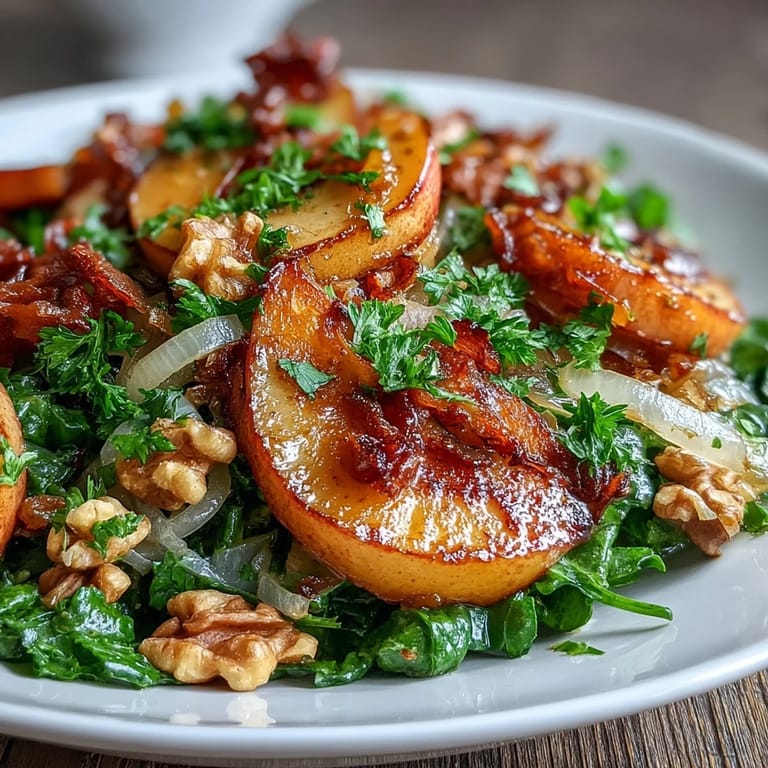
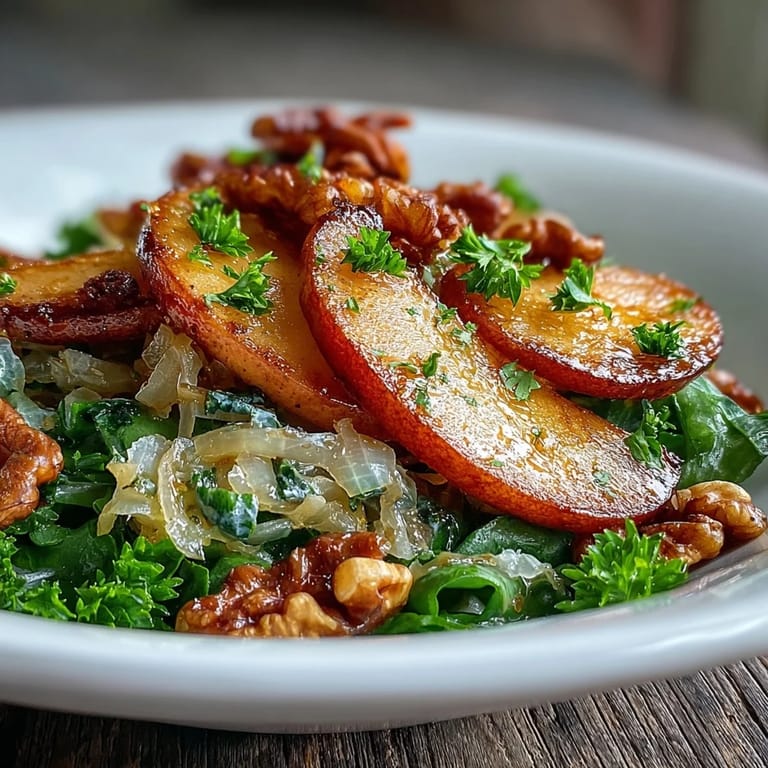
- Transfer everything to a serving platter and scatter your toasted nuts and fresh parsley over the top while it's still warm. This not only makes it look restaurant-worthy but also keeps the garnishes from getting wilted into the warm vegetables.
- Serve as You Like It:
- Eat it immediately while it's warm and the greens are just barely wilted, or let it cool to room temperature if you prefer—both are genuinely delicious, just different experiences.
 Save
Save There's a moment right when you fold in the greens and they start to soften, releasing that raw spinach smell that transforms into something warm and earthy, when you realize this little skillet salad is doing something special. It's become the dish I make when I want to feel grounded and nourished, and when I want to remind people that salad can be warm, complex, and absolutely worth looking forward to.
Why This Works as Both a Side and a Standalone Meal
The beauty of this salad lives in its flexibility—the warm apples and sauerkraut create enough substance and flavor that it stands perfectly well as a light lunch with maybe just a piece of crusty bread alongside. But it also plays beautifully as a side to roasted pork or sausages, where it cuts through richness and adds brightness to heavier plates. The probiotics in the sauerkraut actually aid digestion, which makes this feel less like an indulgence and more like your body thanking you for eating it.
The Science Behind the Caramelization
When those apple slices hit the hot pan, their natural sugars break down and recombine into new compounds that taste deeper, more complex, and infinitely more interesting than raw apples ever could. This transformation happens only at the right temperature and with time—rushing it or cooking too hot just burns the outside without developing that subtle caramel note that makes this dish sing. The honey or maple syrup you add acts as a catalyst, helping accelerate and deepen that caramelization process while adding just enough liquid sweetness to balance the funky tang of the fermented sauerkraut.
Variations and Seasonal Shifts
In autumn I sometimes add thinly shaved fennel for extra brightness, and in spring I'll occasionally finish with a small splash of apple cider vinegar if the sauerkraut feels mellow. You can also experiment with different apple varieties—Granny Smith adds tartness, Pink Lady brings honeyed sweetness, and anything local to your area usually tastes best because it's in season. Here are a few more ways to make this your own:
- Swap the spinach for hardy greens like kale or even omit them entirely for a more traditional German-style warm sauerkraut salad.
- Add a handful of raisins or dried cranberries if you want to push the sweetness further, or embrace the vegan version by using olive oil and maple syrup instead of butter and honey.
- A pinch of ground ginger or a tiny amount of Dijon mustard can add unexpected depth if you're feeling adventurous.
 Save
Save This skillet salad has taught me that the most nourishing meals don't need to be complicated—they just need balance, intention, and the willingness to let warm and tangy be friends. Make it once and you'll understand why it keeps finding its way into my rotation.
Recipe Questions & Answers
- → What type of apples work best for this dish?
Honeycrisp and Gala apples are ideal because they hold their shape when sautéed and offer a perfect balance of sweetness and tartness. You can also use Fuji or Braeburn apples for similar results.
- → Can I make this dish ahead of time?
While best served fresh and warm, you can prepare the components separately up to 2 hours ahead. Reheat the apple and sauerkraut mixture gently before adding the greens just prior to serving.
- → How do I prevent the sauerkraut from becoming too dry?
Drain the sauerkraut but don't rinse it completely, as some brine adds flavor and moisture. Heat it on low for just 2-3 minutes to warm through without evaporating the natural juices.
- → What can I serve this with for a complete meal?
This pairs excellently with roast pork, bratwurst, grilled chicken, or pan-seared salmon. For a vegetarian meal, serve alongside crusty bread, quinoa, or roasted root vegetables.
- → Can I substitute the nuts for a nut-free version?
Absolutely. Replace toasted walnuts with toasted pumpkin seeds or sunflower seeds for crunch, or omit them entirely and add extra fresh herbs or a sprinkle of crispy fried onions.
- → How should I store leftovers?
Store in an airtight container in the refrigerator for up to 3 days. Reheat gently in a skillet over low heat, adding a splash of water or apple cider if needed to refresh the moisture.