 Save
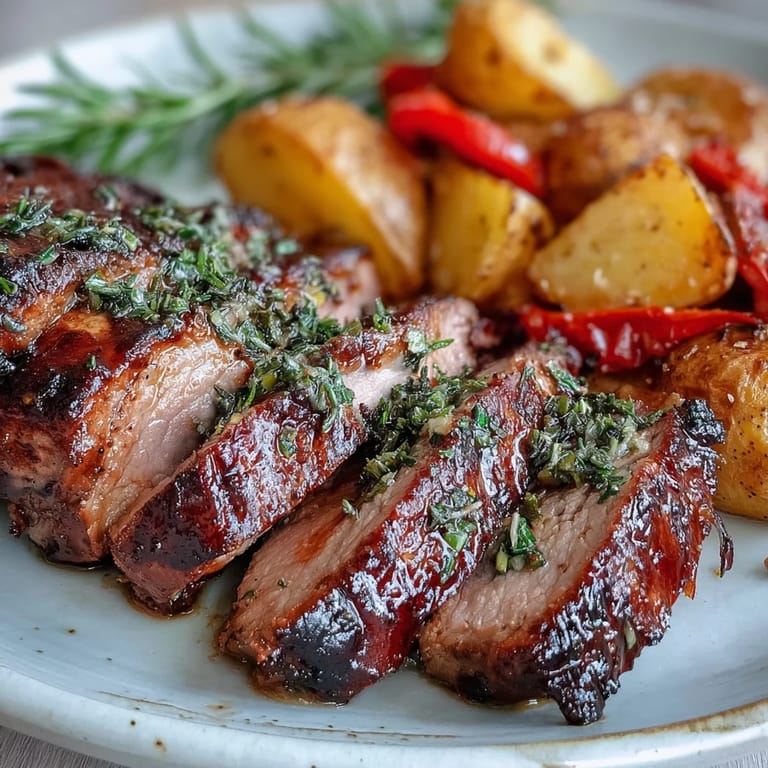
Save Last autumn, my friend Carlos brought back a piece of Ibérico pork from his family's farm in Extremadura. We stood in his tiny kitchen in Madrid, watching the fat render and listening to it sizzle, while he told me about the acorn-fed pigs that make this meat so special. That evening changed everything I thought I knew about pork fillet—no more dry, overcooked disappointment, just succulent, deeply flavored meat that practically melts on your tongue. When I got home, I started experimenting with marinades until I found this combination that balances the pork's natural richness with bright, smoky notes.
I made this for my mother's birthday dinner last spring, and she kept pausing between bites to ask what I'd done differently. The way the smoked paprika caramelizes on the pork's exterior creates this incredible crust that locks in all those juices. Even my teenage nephew, who normally 'doesn't like pork,' went back for seconds and asked if I could teach him how to make it. There's something about the combination of tender meat, crispy potatoes, and sweet roasted peppers that makes people feel cared for.
Ingredients
- Ibérico pork fillet (solomillo): This prized Spanish pork has incredible marbling that keeps it tender and flavorful—regular pork tenderloin works but adjust the cooking time to avoid drying it out
- Extra virgin olive oil: Use the good stuff here since it's the foundation of your marinade and helps all those aromatic flavors penetrate the meat
- Fresh rosemary: Woody and piney, rosemary stands up beautifully to the rich pork and potatoes better than delicate herbs like basil or parsley
- Smoked paprika (pimentón): This is the soul of Spanish cooking—look for authentic pimentón de la Vera with that deep, smoky intensity
- Lemon: Both zest and juice cut through the richness of the Ibérico fat, keeping the whole dish bright and balanced
- New potatoes: Their waxy texture holds up better during roasting than russets, developing creamy centers while getting crisply golden outside
- Red bell peppers: When roasted at high heat, their natural sugars concentrate and caramelize into something almost like a vegetable confit
Tired of Takeout? 🥡
Get 10 meals you can make faster than delivery arrives. Seriously.
One email. No spam. Unsubscribe anytime.
Instructions
- Marinate the pork overnight:
- Whisk together the olive oil, minced garlic, chopped rosemary, smoked paprika, lemon zest, lemon juice, salt, and pepper until well combined. Coat the pork fillet thoroughly, cover, and refrigerate for at least 8 hours—this long marinating time is what makes the difference between good and extraordinary.
- Get your oven ready:
- Preheat to 220°C (425°F) and position your racks in the middle and upper third of the oven so both trays cook evenly without crowding.
- Prep the potatoes for roasting:
- Toss the quartered potatoes with olive oil, salt, pepper, smoked paprika, and thyme until evenly coated. Spread them in a single layer on a large baking sheet, giving them plenty of room to get crispy.
- Season the red peppers:
- Arrange pepper strips on a second baking tray, toss with olive oil, sliced garlic, and salt, then spread them out so they roast instead of steam.
- Start the roasting:
- Put both trays in the oven—potatoes on the middle rack for 35–40 minutes, peppers on the upper rack for 20–25 minutes. Stir the potatoes halfway through so all sides get that golden crunch.
- Sear the pork fillet:
- Pat the marinated pork dry with paper towels—this helps it develop a beautiful crust. Heat olive oil in an ovenproof skillet over medium-high heat and sear 2–3 minutes per side until deeply browned.
- Finish in the oven:
- Transfer the skillet directly to the oven and roast for 12–15 minutes until the internal temperature reaches 63°C (145°F). Let the pork rest for 5 minutes before slicing—this crucial step redistributes the juices so they don't escape the moment you cut into it.
- Plate and serve:
- Slice the rested pork against the grain into thick medallions and arrange alongside the golden potatoes and sweet roasted peppers. Spoon any pan juices over the top for extra flavor.
 Save
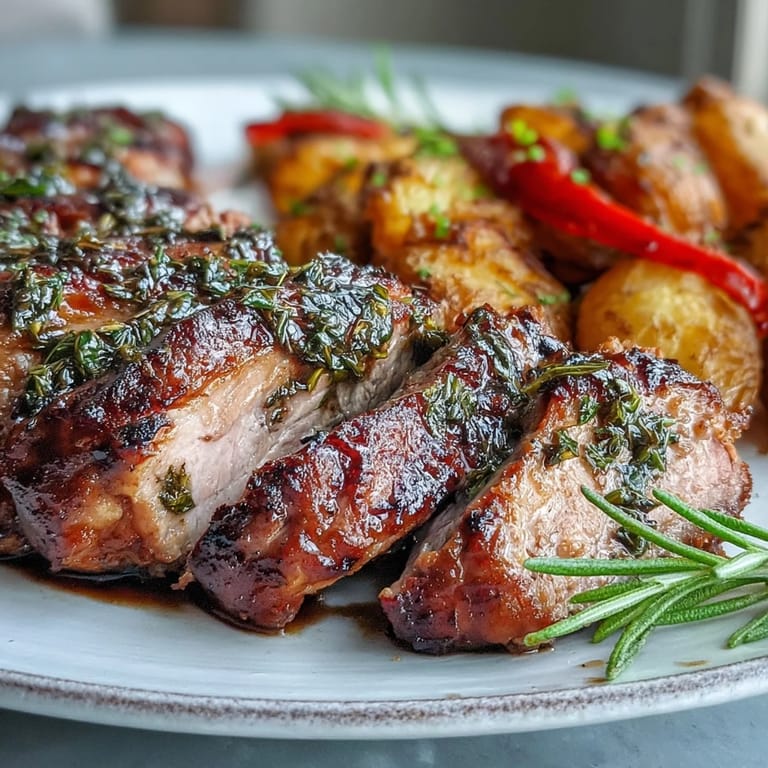
Save The first time I served this, a guest asked for the recipe before she'd even finished her plate. Something about the combination of smoky, savory, and bright flavors makes people feel like they're eating at a hidden tapas bar in Seville. Now it's my go-to for dinner parties when I want to serve something impressive but not fussy.
Choosing the Right Pork
Ibérico pork is worth seeking out at specialty butcher shops or online—those acorn-fed pigs produce meat with incredible marbling and a distinct nutty flavor. If you can't find it, look for heritage breed pork or berkshire tenderloin, which will still give you better results than conventional pork. The extra cost translates directly to tenderness and depth of flavor.
Perfecting the Marinade
The ratio of acid to fat in this marinade strikes a careful balance—too much lemon juice can break down the proteins too much and leave the meat with a mushy texture. I've also discovered that crushing the garlic rather than minching it releases more of its oils, while slightly bruising the rosemary with a mortar and pestle before chopping wakes up its aromatic oils. Every small adjustment compounds into a better final dish.
Timing Everything Perfectly
The key to having everything hot at the same time is staging—put the potatoes in first, then the peppers 15 minutes later, and sear the pork just as the vegetables are finishing. I learned to set timers for everything because once you're managing three trays and a skillet, it's easy to lose track. The pork keeps cooking while it rests, so pull it at 60°C (140°F) if you prefer it slightly less done.
- Set out all your serving platters before you start cooking so you're not scrambling at the last minute
- Warm your plates in a low oven for 10 minutes before serving—hot food on cold plates loses heat too quickly
- Have a sharp knife ready for slicing the rested pork so you get clean, appetizing cuts
 Save
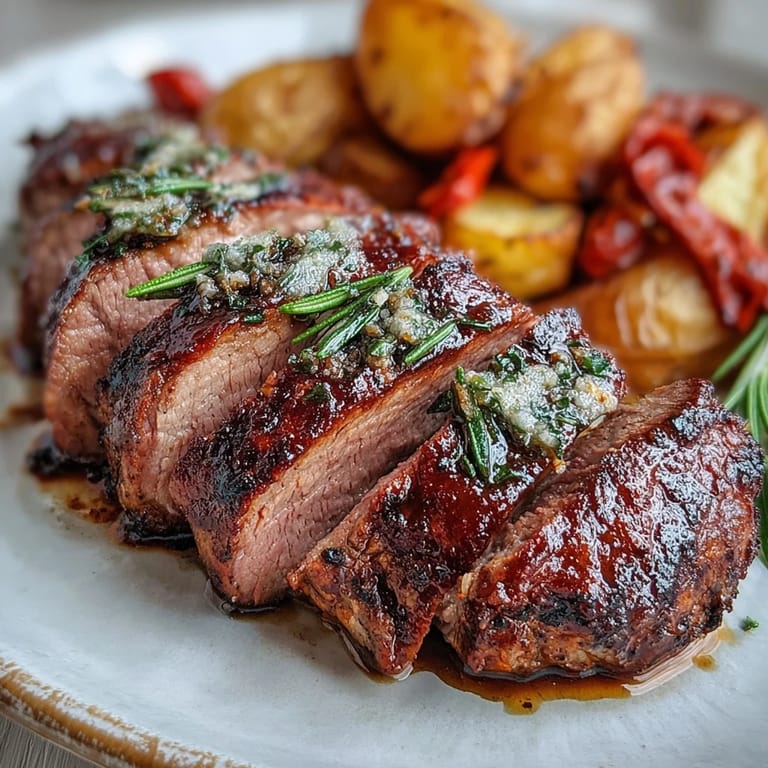
Save This dish has become my favorite way to make an ordinary Tuesday night feel like a celebration. There's something deeply satisfying about serving food that looks impressive but comes together with such straightforward technique.
Recipe Questions & Answers
- → Why marinate the Ibérico pork overnight?
Marinating the Ibérico pork fillet overnight allows the flavors of garlic, rosemary, smoked paprika, and lemon to deeply penetrate the meat, tenderizing it and enhancing its succulence and aromatic profile. This extended period ensures a more flavorful and moist result.
- → Can I use a different cut of pork or substitute Ibérico?
Yes, if Ibérico pork fillet is unavailable, you can substitute it with a regular pork tenderloin. Be aware that regular pork may cook slightly faster, so monitor the internal temperature closely to ensure it reaches 63°C (145°F) for safe consumption while remaining tender.
- → What's the best way to achieve crispy roasted potatoes?
For crispy potatoes, ensure they are tossed thoroughly with oil and spices before roasting. Spread them in a single layer on a baking tray without overcrowding, allowing steam to escape and browning to occur. Roasting at a high temperature (220°C/425°F) and stirring halfway also helps achieve that desirable crisp exterior.
- → How do I know when the pork is perfectly cooked?
The pork fillet is perfectly cooked when its internal temperature reaches 63°C (145°F). Use a meat thermometer inserted into the thickest part of the fillet. After cooking, it's crucial to let the pork rest for at least 5 minutes before slicing; this allows the juices to redistribute, ensuring a tender and moist serving.
- → What are some good accompaniments or serving suggestions for this dish?
Beyond the roasted potatoes and red peppers, this flavorful main course pairs wonderfully with a simple green salad or some sautéed greens. Drizzle any pan juices over the sliced pork for extra flavor. A Spanish red wine like Rioja or Tempranillo would complement the rich, smoky notes beautifully.