 Save
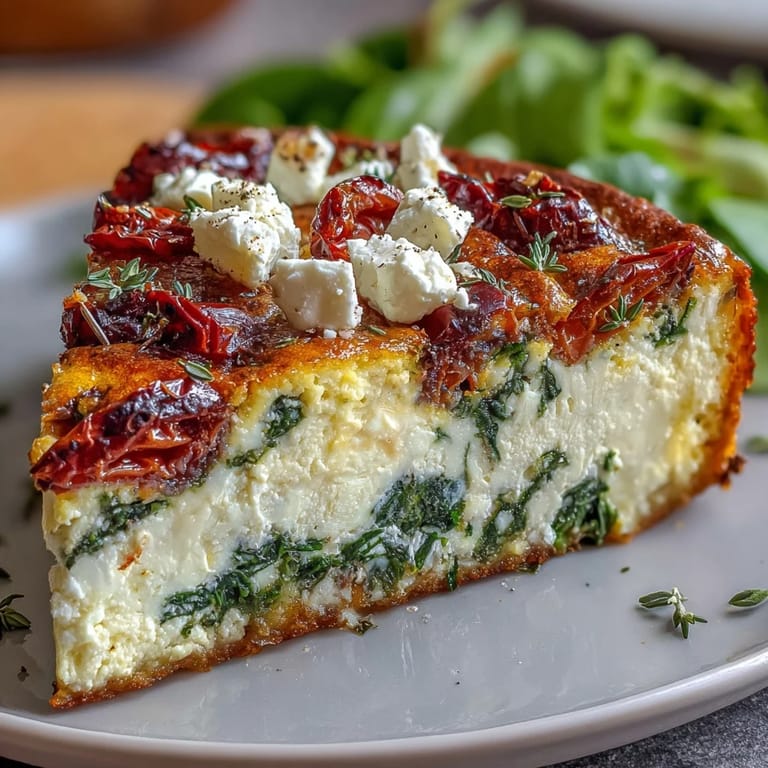
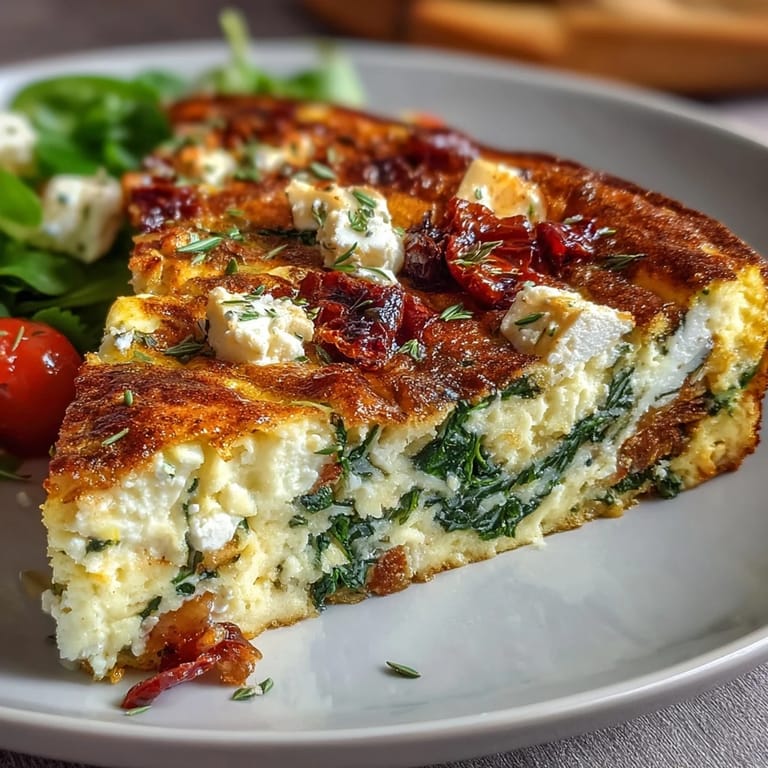
Save My neighbor knocked on the door one Saturday morning with a basket of sun-dried tomatoes from her garden project, and I suddenly had to figure out what to do with them before they went stale. I'd been craving something warm and filling but didn't want to spend hours in the kitchen, so I raided my fridge and found spinach, feta, and eggs—the usual suspects. What came out of the oven twenty minutes later was a frittata so golden and fragrant that she asked for the recipe before she'd even sat down.
I made this for a group of friends who showed up unannounced one Sunday, and watching them devour it straight from the skillet told me everything I needed to know. The frittata had this perfect jiggle to the center that meant it was cooked through but still creamy, and somehow the simplicity of it made everyone feel welcome at the table.
Ingredients
- Fresh baby spinach, roughly chopped: Two cups may seem like a lot, but it wilts down dramatically and keeps the frittata light and full of green goodness.
- Sun-dried tomatoes, julienned: Packed in oil and drained, these bring a concentrated, sweet-tart flavor that regular tomatoes can't match—buy the good ones because they're the star here.
- Small yellow onion, finely chopped: Soft and sweet when sautéed, it builds the foundation for everything else.
- Garlic clove, minced: One is all you need unless you're a garlic lover like me, in which case throw in another half.
- Large eggs: Room temperature if you remember to pull them out early—they blend more smoothly and cook more evenly.
- Whole milk: A quarter cup keeps the frittata tender and creamy rather than dense and rubbery.
- Feta cheese, crumbled: The tanginess is non-negotiable, and crumbling it yourself rather than buying pre-crumbled means bigger, better flavor pockets.
- Grated Parmesan cheese: A quarter cup adds a salty, nutty undertone that deepens everything.
- Dried oregano: Half a teaspoon is the right amount—oregano can overpower, so be gentle.
- Freshly ground black pepper and salt: Taste as you go because the cheeses are already salty.
- Olive oil: Two tablespoons for sautéing the vegetables and coating the pan.
Tired of Takeout? 🥡
Get 10 meals you can make faster than delivery arrives. Seriously.
One email. No spam. Unsubscribe anytime.
Instructions
- Heat your oven and get your skillet ready:
- Set your oven to 375°F (190°C) so it's warm and waiting when you need it. Use an ovenproof skillet—cast iron or stainless steel with a metal handle works beautifully.
- Build the vegetable base:
- Heat olive oil over medium heat and add the onion, letting it soften for 3 to 4 minutes until it's golden at the edges and smells sweet. Add the minced garlic and cook for just 1 minute more so it doesn't burn.
- Wilt the spinach and add the tomatoes:
- Stir in the chopped spinach and watch it transform from a pile into silky green strands, about 2 minutes. Add the sun-dried tomatoes and cook for 1 more minute to warm them through and release their flavor.
- Prepare the egg mixture:
- In a bowl, whisk together the eggs and milk until there are no streaks of white, then season with oregano, salt, and pepper. Fold in the crumbled feta and grated Parmesan, keeping some texture rather than blending them smooth.
- Combine and begin cooking:
- Pour the egg mixture over the vegetables and give it one gentle stir to distribute everything evenly. Let it cook on the stovetop for 2 to 3 minutes until you see the edges setting but the center still moving slightly.
- Finish in the oven:
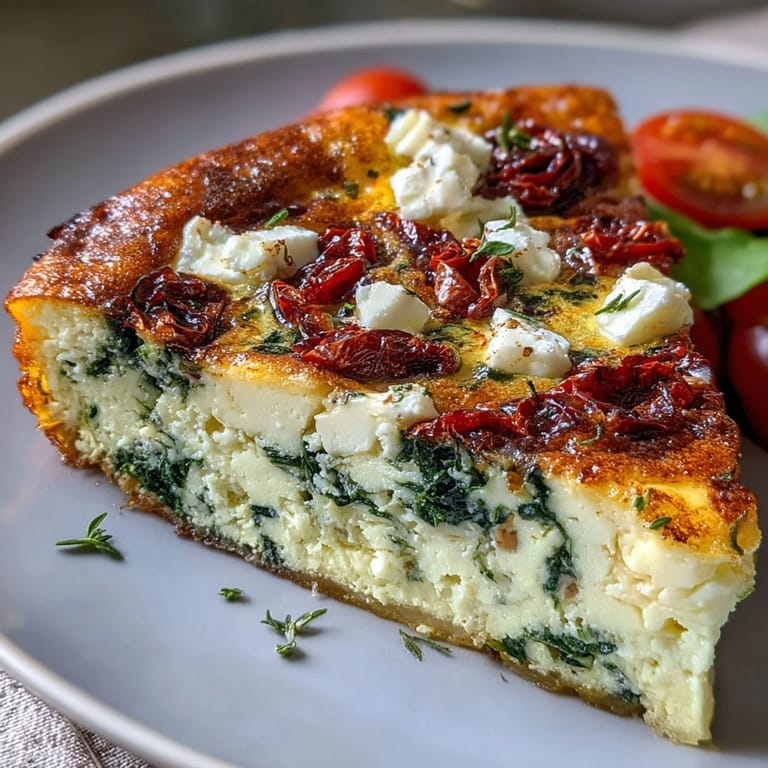
- Transfer the skillet to the oven and bake for 10 to 12 minutes until the center is just set and the top has turned a light golden color. It should jiggle ever so slightly when you shake the pan—that's the sign it's done.
- Rest and serve:
- Let it cool for a few minutes so the eggs firm up slightly, then slice into wedges and serve warm or at room temperature with a simple salad on the side.
 Save
Save The moment that made me feel like a real cook was when I stopped worrying about the frittata being perfect and just let it be what it was—a tangle of vegetables and cheese held together by eggs, humble and honest. That's when my guests actually started enjoying it instead of waiting for me to apologize for it.
The Secret to Creamy Texture
The milk is the quiet hero here, but here's what I learned the hard way: too much and it turns soupy, too little and it becomes a dry omelet. That quarter cup ratio is exact because it creates just enough moisture for the eggs to stay tender throughout the cooking process without becoming watery.
Why Room Temperature Eggs Matter
Cold eggs straight from the fridge blend unevenly and cook in layers rather than uniformly, which sounds fancy but actually means some parts get rubbery while others stay too soft. If you remember to set them out for 10 minutes before cooking, the difference in texture is noticeable and worth the small bit of planning.
Making It Your Own
The beauty of a frittata is that it adapts to whatever you have on hand, so feel free to swap in roasted red peppers, mushrooms, fresh herbs, or different cheeses depending on your mood and pantry. I've made versions with caramelized onions and goat cheese that were equally memorable, and the technique stays exactly the same.
- Frozen spinach works perfectly if you thaw it completely and squeeze out every bit of moisture before adding it to the pan.
- A splash of fresh lemon juice squeezed over the sliced frittata brightens all the Mediterranean flavors right before serving.
- Prep your vegetables while the oven preheats so you're not rushing when the stovetop cooking starts.
 Save
Save This frittata has become my go-to when I want to feel like I've cooked something special without spending my whole day in the kitchen, and that combination of ease and elegance is something worth coming back to again and again.
Recipe Questions & Answers
- → Can I use frozen spinach instead of fresh?
Yes, thawed and well-drained frozen spinach works well without changing the texture significantly.
- → What is the best cheese for this dish?
Feta provides a tangy bite, complemented by Parmesan’s savory depth, creating a balanced flavor.
- → How do I know when the frittata is cooked?
The edges should be set and the center slightly golden but still moist when done baking.
- → Can this be made dairy-free?
Plant-based feta and omitting Parmesan allow for a dairy-free variation without losing flavor.
- → What sides pair well with this frittata?
Simple green salads, crusty bread, and crisp white wines like Sauvignon Blanc highlight the flavors.