 Save
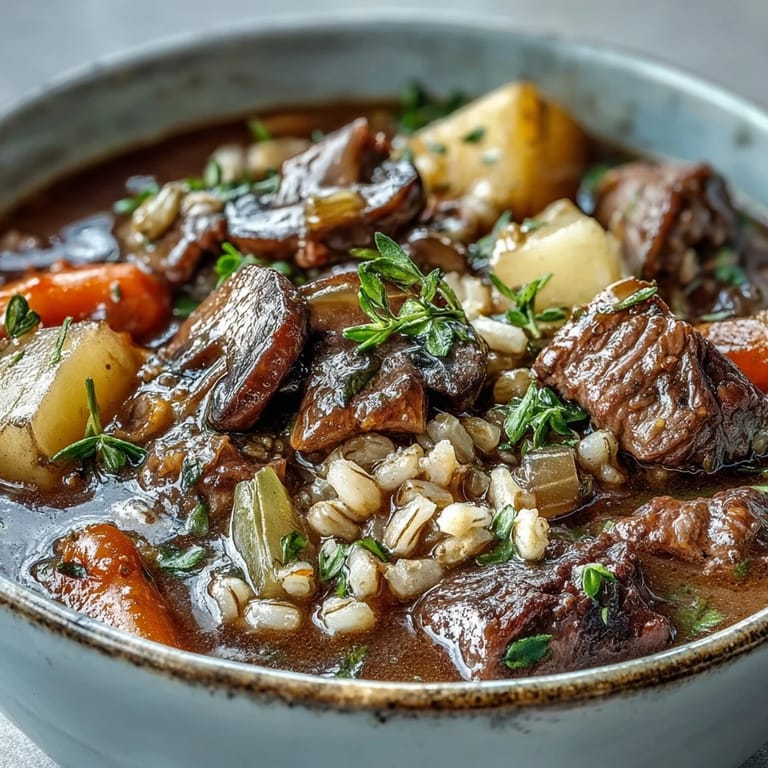
Save There's something about the smell of beef browning in a hot pot that stops me mid-afternoon—it's a signal that something substantial is coming. Years ago, I made this soup on a whim when temperatures dropped and my pantry looked sparse, just beef, barley, and whatever vegetables hadn't wilted yet. What emerged was this deeply satisfying bowl that felt less like cooking and more like an act of care, the kind you do for people you want to feed well. Now it's become my go-to when I need comfort that actually nourishes, not just fills.
I served this to my neighbor when she was recovering from surgery, and watching her eyes light up as she tasted it reminded me why soup matters. She called days later asking for the recipe, and I realized the barley was what made her feel it was 'real' somehow—not just broth with vegetables, but something built to last in your body. That moment shifted how I think about this soup; it's not fancy, but it's honest.
Ingredients
- Beef stew meat (500 g): Cut into 1-inch cubes and browned properly—don't skip this step because those caramelized edges are where the flavor actually lives.
- Pearl barley (100 g): Rinsed before adding, it plumps up beautifully and gives the soup its signature hearty texture that feels almost creamy.
- Onion, carrots, and celery (1 large onion, 2 medium carrots, 2 stalks): This is your flavor foundation, the holy trinity that builds depth in every spoonful.
- Cremini or white mushrooms (250 g): Sliced and added after the soffritto, they deepen the umami and make the broth richer than you'd expect.
- Garlic (2 cloves): Minced and added after vegetables so it doesn't burn, this is your bridge between raw and cooked flavors.
- Potato (1 medium): Peeled and diced, it helps thicken the soup naturally as it breaks down, no cornstarch needed.
- Diced tomatoes (1 can, 400 g): With juices included, they add acidity and brightness that cuts through the richness of the beef.
- Beef broth (1.5 L): Use quality broth here because it's the liquid foundation—taste it first, and adjust seasoning accordingly.
- Bay leaf, thyme, and parsley (1 bay leaf, 1 tsp each dried): Dried herbs work here because long simmering brings out their essence, but remove the bay leaf before serving.
- Olive oil (2 tbsp): High enough heat to get a proper sear on the beef, this is not the time for timid cooking.
- Salt and black pepper: Season at the end, after tasting, because broth saltiness varies and you want control.
Tired of Takeout? 🥡
Get 10 meals you can make faster than delivery arrives. Seriously.
One email. No spam. Unsubscribe anytime.
Instructions
- Sear the beef until it's properly golden:
- Heat olive oil in your pot over medium-high until you hear it sizzle, then add beef cubes in a single layer. Let them sit for 2–3 minutes before moving them so they develop a dark crust—this is non-negotiable flavor. Work in batches if needed; crowding the pot steams instead of sears.
- Build your flavor base with vegetables:
- Remove beef and add onion, carrots, and celery to the same pot, scraping up those browned bits stuck to the bottom. Cook for 4–5 minutes until they soften and smell sweet, then add sliced mushrooms and cook another 3 minutes until they release their moisture and darken.
- Wake up the garlic:
- Stir in minced garlic and cook for just 1 minute—you want it fragrant but not browning, which would make it bitter.
- Bring everything together in the pot:
- Return beef to the pot and add potatoes, canned tomatoes with their juices, rinsed barley, beef broth, bay leaf, thyme, and parsley. Stir thoroughly so nothing sticks to the bottom, then bring to a boil.
- Simmer low and long for tenderness:
- Reduce heat to low, cover, and let it bubble gently for 1 hour, stirring occasionally so barley doesn't stick. The soup will smell incredible and your house will feel warm.
- Check for doneness and adjust texture:
- After 1 hour, test a piece of beef and a barley kernel—both should be tender. If barley still has a bite, simmer uncovered for another 15–20 minutes so it softens and the broth thickens slightly.
- Season and serve with intention:
- Remove the bay leaf, taste the soup, then add salt and pepper gradually until it tastes like comfort. Ladle into bowls and top with fresh parsley if you have it.
 Save
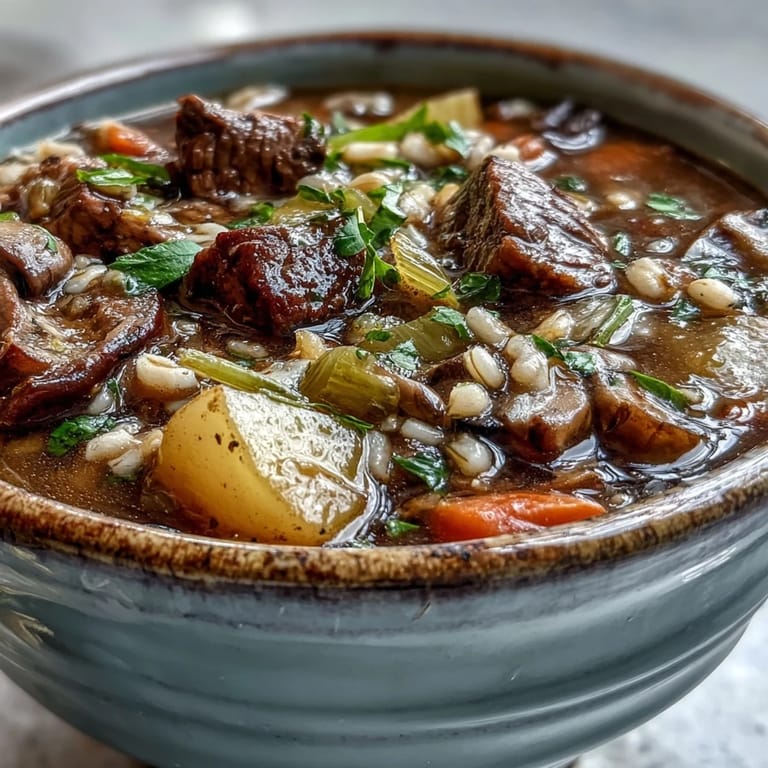
Save There was a night when I ladled this soup into bowls for three generations at the same table, and nobody spoke much because they were too busy eating and feeling full in a way that goes beyond hunger. It struck me that this is what cooking at home is really about—making something so straightforward and genuine that people remember it.
Building Flavor in Layers
This soup works because each step builds on the last one. Browning beef creates umami, sweating vegetables releases their sugars, adding garlic after softer vegetables prevents burning, and long simmering marries everything together. I used to think you just threw ingredients in a pot, but watching how a soup transforms over time taught me that patience and sequence are where flavor actually comes from. It's a small lesson that changed how I approach cooking entirely.
Why Pearl Barley Matters Here
If you've never used barley in a soup before, this is the recipe to start with because it's forgiving and transformative. Unlike rice that can turn mushy, barley gets creamy on the outside while keeping a slight chew in the center, almost like tiny pearls. The texture change happens gradually as you simmer, and by the time the soup is done, it feels substantial enough that you don't miss cream or butter. I've had people ask if there's something secret in this soup, and the answer is usually just the barley doing its quiet work.
Customizing Without Losing the Soul
This soup is forgiving enough that you can adjust it based on what's in your kitchen or what you're craving. A splash of dry red wine after browning the beef deepens the flavor in a way that feels almost necessary on cold days, and fresh kale or spinach added in the last 10 minutes adds brightness without overwhelming the earthiness. Some people swap chicken broth for beef broth to lighten it, or use ground beef instead of stew meat if time is short—the technique stays the same, only the details shift. Here are the adjustments I've found that actually work:
- Red wine adds complexity, so add a splash after browning beef and let it simmer for 2 minutes before adding vegetables.
- Swap broth types freely, but taste as you go because lighter broths need slightly different seasoning than beef.
- Add greens only in the last few minutes so they stay bright and don't discolor the whole pot.
 Save
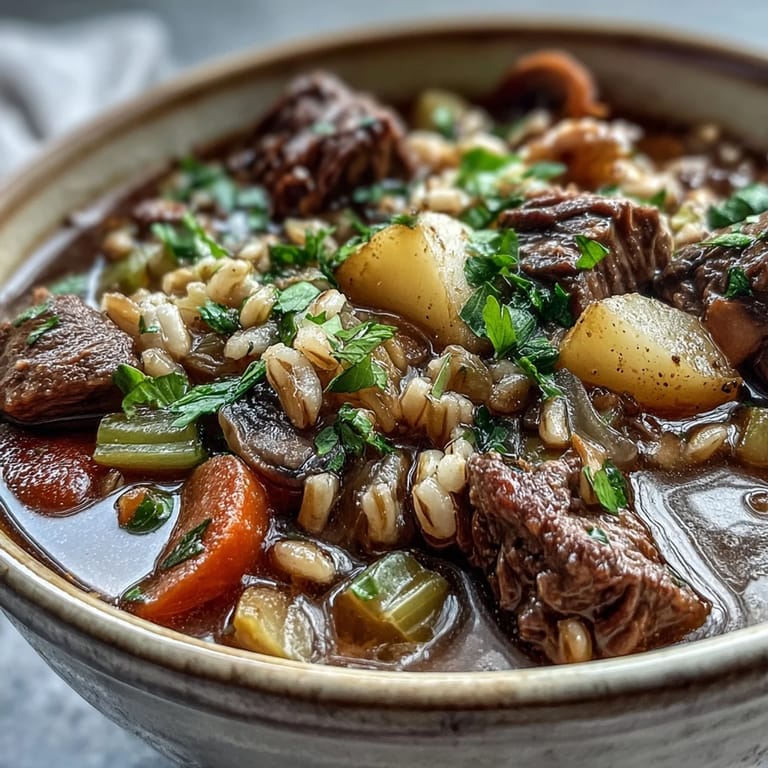
Save Make this soup when you want to feel grounded, or when someone else needs exactly that feeling. It's one of those recipes that proves you don't need anything complicated to make food that matters.
Recipe Questions & Answers
- → Can I use quick-cooking barley instead of pearl barley?
Yes, quick-cooking barley works well and reduces cooking time by about 20 minutes. Add it later in the cooking process and adjust liquid as needed since it absorbs less broth than pearl barley.
- → How do I store and reheat leftovers?
Store in an airtight container in the refrigerator for up to 4 days. The barley will continue absorbing liquid, so add extra broth when reheating. Reheat gently on the stovetop or in the microwave until warmed through.
- → Can I make this in a slow cooker?
Absolutely. Brown the beef and sauté vegetables first, then transfer everything to a slow cooker. Cook on low for 6-8 hours or high for 3-4 hours until beef and barley are tender.
- → What cuts of beef work best for this soup?
Chuck roast, beef shank, or stewing beef are ideal choices. These tougher cuts become tender and flavorful with slow simmering. Trim excess fat before cutting into cubes for best results.
- → Can I freeze this soup?
Yes, this soup freezes well for up to 3 months. Cool completely before transferring to freezer-safe containers. Note that barley may soften further after freezing, but the flavor remains excellent.
- → What vegetables can I substitute or add?
Feel free to add parsnips, turnips, green beans, or peas. Leafy greens like kale or spinach work wonderfully when stirred in during the last 10 minutes of cooking for added nutrition and color.