 Save
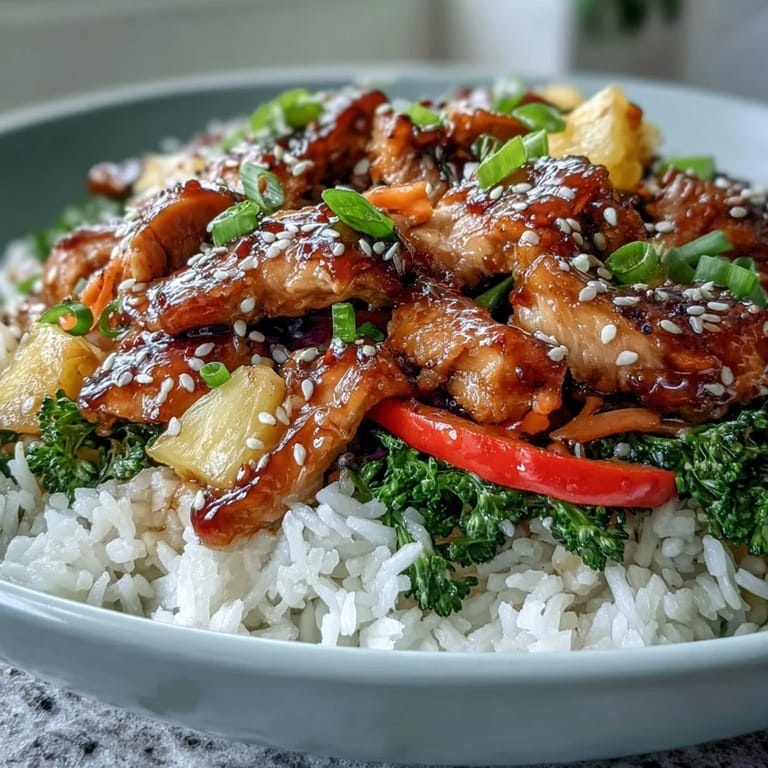
Save There's something about the sizzle of chicken hitting a hot pan that makes my kitchen feel alive, and that's exactly what happens when I make this teriyaki bowl. My neighbor once caught the aroma wafting over the fence and showed up at my door asking what smelled so good—that's when I knew this recipe was worth perfecting. The combination of sweet glaze, tender chicken, and that unexpected brightness from pineapple creates something that feels both comforting and a little bit exciting. It's the kind of meal that makes weeknight cooking feel less like a chore and more like a small celebration.
I made this for my partner when they came home stressed from work, and watching their face light up on the first bite was one of those small kitchen victories that stayed with me. The pineapple adds this surprising sweetness that catches you off guard in the best way, and suddenly the whole bowl feels like more than just dinner—it's a moment of care on a plate.
Ingredients
- Boneless, skinless chicken thighs or breasts (1.5 lbs): Thighs stay juicier than breasts, but honestly, use what you have—just cut everything into consistent bite-sized pieces so it cooks evenly.
- Soy sauce (1/3 cup): This is your backbone, the thing that makes it actually taste like teriyaki and not just sweet chicken—don't skimp here.
- Mirin (1/4 cup): Japanese sweet rice wine that brings a subtle depth you can't replicate with brown sugar alone, though I've tried.
- Brown sugar and honey (2 tbsp each): Together they create that glossy finish that makes the dish look like you spent hours on it.
- Rice vinegar (1 tbsp): A small splash that cuts through the sweetness and keeps the sauce from tasting one-dimensional.
- Garlic and ginger (2 cloves and 1 tsp fresh): Mince these finely so they dissolve into the sauce rather than sitting as little chunks.
- Sesame oil (1 tsp): Just a teaspoon—more would overpower—but it's what makes someone say 'wow, what's that flavor' without being able to place it.
- Cornstarch slurry (1 tbsp cornstarch + 2 tbsp water): This is your thickening agent that transforms the sauce from thin and forgettable to glossy and cling-to-the-rice worthy.
- Jasmine or short-grain white rice (2 cups): Jasmine absorbs the sauce beautifully and smells amazing while cooking—it's worth seeking out if you can.
- Broccoli, carrots, bell pepper, snap peas (1 cup each): The vegetable mix is flexible, but these colors and textures work together without competing for attention.
- Fresh pineapple (1 cup diced): Canned works in a pinch, but fresh pineapple brings brightness that canned can't quite capture—it's the unexpected turn that makes people ask for the recipe.
- Scallions and sesame seeds (2 tbsp and 1 tsp): These finish the bowl with visual pop and textural contrast that makes you feel like you're eating something restaurant-quality.
Tired of Takeout? 🥡
Get 10 meals you can make faster than delivery arrives. Seriously.
One email. No spam. Unsubscribe anytime.
Instructions
- Rinse and start your rice:
- Run cold water over your rice while stirring it with your fingers—you're looking for the water to go from cloudy white to almost clear, which takes a few passes. Combine it with 3 cups of water and a pinch of salt in a saucepan, bring to a boil, then drop the heat to low, cover it, and let it sit undisturbed for 15 minutes.
- Build your sauce while rice cooks:
- Whisk together soy sauce, mirin, brown sugar, honey, rice vinegar, minced garlic, ginger, and sesame oil in a small bowl—you want everything combined and smooth. This is your window to make sure there are no sugar lumps hiding at the bottom.
- Marinate the chicken:
- Cut your chicken into pieces roughly the size of a large grape, then pour half the sauce over them and toss everything together. Let it sit while you prep vegetables—even 10 minutes makes a difference in flavor absorption.
- Stir-fry vegetables until they're bright and crisp-tender:
- Heat vegetable oil in a large skillet or wok over medium-high heat until it shimmers slightly, then add broccoli, carrots, bell pepper, and snap peas. Stir constantly for 3 to 4 minutes—you want them to look vibrant and slightly tender but still have a little bite, then scoop them onto a plate.
- Cook the chicken until it's golden and cooked through:
- Return the pan to medium-high heat and add your marinated chicken pieces, spreading them out in a single layer. Let them sit undisturbed for a minute or two so they brown, then stir occasionally for about 6 to 8 minutes total until there's no pink inside.
- Thicken the sauce to glossy perfection:
- Pour the remaining sauce into the pan with the cooked chicken, then quickly whisk your cornstarch with 2 tablespoons of water to make a slurry—pour it in and stir constantly. Within 2 to 3 minutes you'll see it transform from thin to thick and shiny, which means it's ready.
- Assemble your bowls with intention:
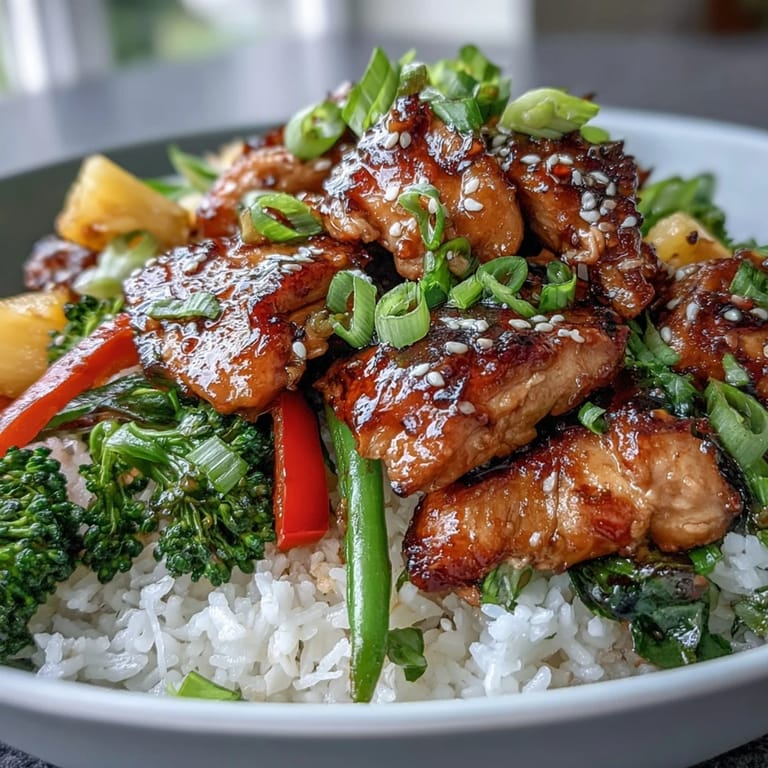
- Fluff your rice with a fork and divide it among four bowls, then top each one with a handful of teriyaki chicken, a scoop of vegetables, and a handful of fresh pineapple. Finish with sliced scallions and a sprinkle of toasted sesame seeds.
 Save
Save I realized this dish had become something special when my kid asked to help make it, and suddenly we had a kitchen project that didn't feel like a battle. The repetitive chopping, the steam rising from the pan, the way their face looked watching the sauce thicken—these are the moments that make me keep this recipe close.
The Secret Behind the Glaze
The magic isn't in any single ingredient but in how they talk to each other. The soy sauce brings salt and umami, the mirin adds subtle sweetness and richness, the brown sugar and honey create caramel undertones, and the rice vinegar cuts through it all so nothing feels cloying. When these come together and coat warm chicken, something happens that tastes restaurant-quality but feels homemade. I've tried to recreate this with grocery-store teriyaki sauce before, and it's never quite the same—there's a flatness that just doesn't compare.
Why Pineapple Changes Everything
Fresh pineapple isn't just a garnish here—it's a flavor contract that softens the salty-sweet sauce and adds brightness that makes your palate reset between bites. The slight acidity plays beautifully against the richness of the chicken, and the texture contrast keeps the bowl from feeling heavy. It's one of those additions that seems optional until you taste it, and then you wonder how anyone makes teriyaki without it.
Beyond the Basic Bowl
This recipe is a canvas that invites customization, and I've learned that's part of what makes it come alive in different seasons and moods. In summer, I add extra pineapple and serve it cold the next day for lunch. In winter, I skip the fresh fruit and add mushrooms and baby corn instead. The foundation stays the same, but the expression changes.
- Vegetarian variation: Substitute chicken with extra-firm tofu or tempeh, pressing them thoroughly before marinating so they absorb all that sauce flavor.
- Temperature flexibility: This bowl works beautifully at room temperature or chilled, making it perfect for packed lunches or meal prep sessions.
- Heat level: Serve with sriracha or chili oil on the side so people can adjust the spice to their liking without changing the base recipe.
 Save
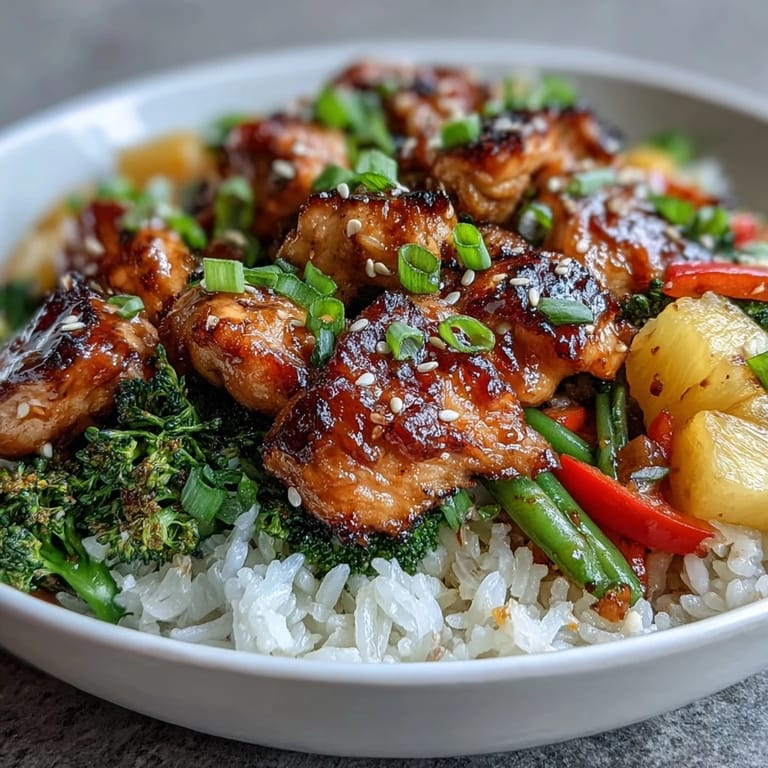
Save This teriyaki chicken and rice bowl became my go-to because it hits that rare sweet spot of being both approachable on a weeknight and impressive enough to serve friends. Every time I make it, I'm reminded that the best recipes aren't the most complicated ones—they're the ones that taste like they came from somewhere meaningful.
Recipe Questions & Answers
- → What cut of chicken works best for teriyaki bowls?
Boneless, skinless chicken thighs are ideal because they stay juicy and tender during cooking. Chicken breasts work well too—just be careful not to overcook them. Cut the chicken into uniform bite-sized pieces for even cooking and easy eating.
- → Can I make the teriyaki sauce ahead of time?
Absolutely. The teriyaki sauce can be prepared up to a week in advance and stored in an airtight container in the refrigerator. The flavors actually develop and meld together over time, making it even more delicious. Bring it to room temperature before using.
- → What vegetables can I substitute?
Feel free to use whatever vegetables you have on hand. Mushrooms, zucchini, baby corn, snow peas, or bok choy all work beautifully. The key is to cut everything into similar-sized pieces so they cook evenly and maintain their crunch.
- → Is this dish spicy?
Traditional teriyaki is not spicy, focusing instead on the balance between sweet and savory flavors. If you enjoy heat, drizzle sriracha or chili oil over the finished bowl. Fresh sliced jalapeños or a sprinkle of red pepper flakes also add a nice kick.
- → Can I make this vegetarian?
Yes, substitute the chicken with firm tofu cubes or tempeh. Press the tofu first to remove excess moisture, then marinate and cook it the same way as the chicken. The teriyaki sauce provides plenty of umami flavor that complements plant-based proteins beautifully.
- → What type of rice should I use?
Jasmine rice or short-grain white rice both work wonderfully. Jasmine adds a subtle floral aroma, while short-grain rice is slightly stickier and traditional for Japanese-style bowls. Brown rice is also a nutritious option, though it will require a longer cooking time and more water.