 Save
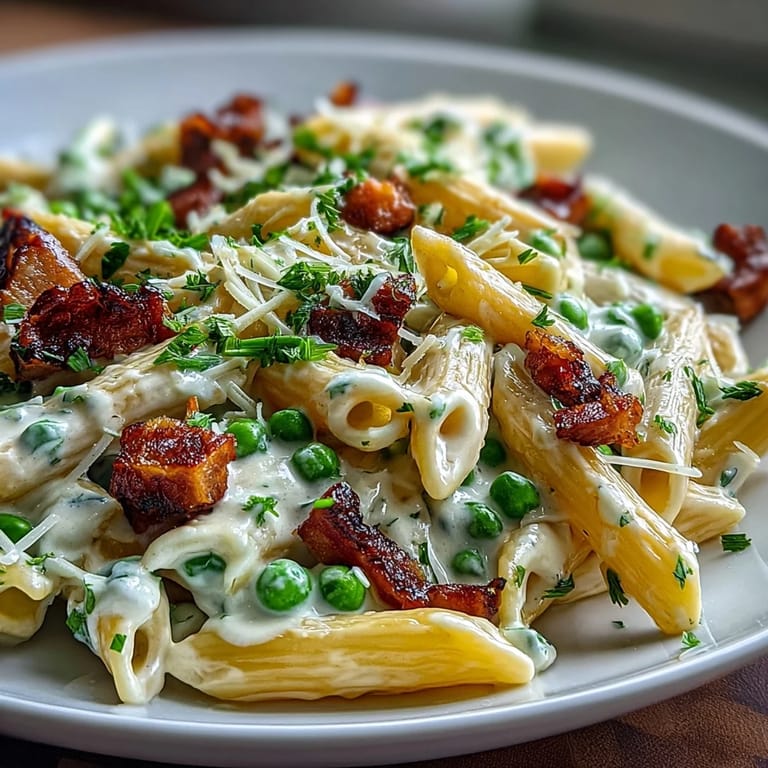
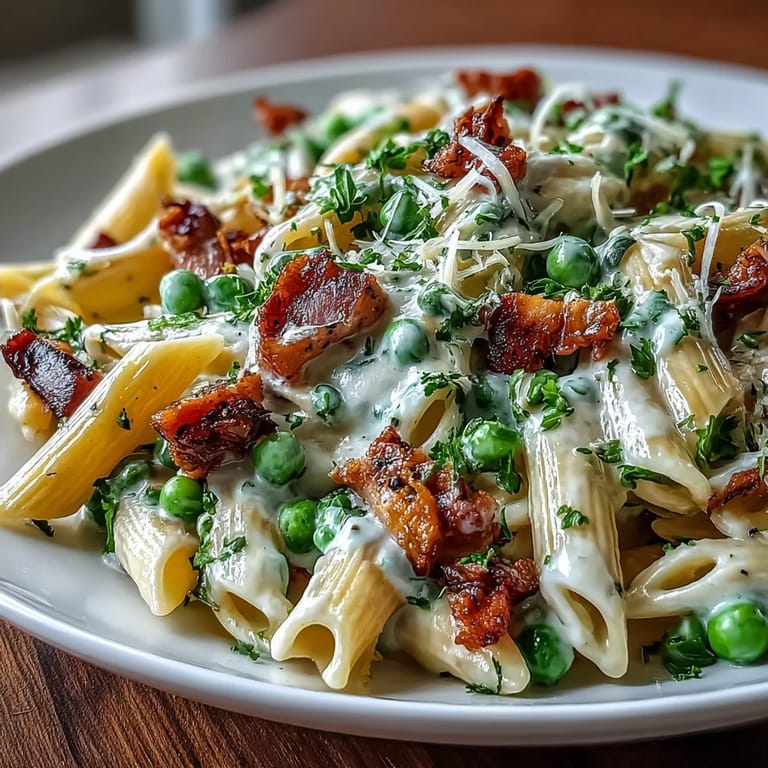
Save There's something about March that makes me crave bright, uncomplicated food, and this Spring Pea & Ham Pasta arrived in my kitchen on one of those grey afternoons when I was staring at a chunk of leftover ham and a bag of frozen peas, wondering what could possibly feel like dinner. Twenty minutes later, my small kitchen smelled like butter and cream, and I realized I'd stumbled onto exactly the kind of dish that doesn't require a fuss but delivers real comfort.
I made this for my sister last spring when she stopped by with her toddler, and within minutes the kid was actually eating vegetables without negotiation—the peas disappear into the cream so naturally that they become part of the deliciousness rather than something to pick around. My sister asked for the recipe before she even finished her plate, and I loved that it was the kind of thing she could actually make on a Tuesday.
Ingredients
- Penne pasta (350 g): The tubes catch the cream sauce beautifully, though any short pasta works—I've used fusilli when that's what was in the cabinet and it's equally good.
- Fresh or frozen peas (1 cup): Frozen peas are genuinely your friend here; they're picked at peak ripeness and cook perfectly in the time it takes the cream to warm through.
- Cooked ham (1 cup, diced): This is where you rescue that leftover ham from the back of your fridge—aim for chunks rather than thin slices so they hold their shape.
- Heavy cream (1 cup): The backbone of the sauce; don't skip it even if you're tempted, because half-and-half makes it feel thin rather than luxurious.
- Unsalted butter (2 tbsp): This builds the foundation of flavor before the cream goes in, so resist the urge to rush past this step.
- Grated Parmesan cheese (1/2 cup): Freshly grated makes a real difference in how it melts and distributes through the sauce.
- Garlic (2 cloves, minced) and onion (1 small, finely chopped): These are your aromatic base, adding depth that prevents the dish from tasting one-note.
- Fresh parsley (2 tbsp, chopped): Optional, but a small handful at the end brightens everything and reminds you it's spring.
- Salt and pepper: Season gently and taste as you go—the ham and Parmesan already bring saltiness to the party.
Tired of Takeout? 🥡
Get 10 meals you can make faster than delivery arrives. Seriously.
One email. No spam. Unsubscribe anytime.
Instructions
- Salt your pasta water and get it boiling:
- Fill a large pot about three-quarters full and salt it generously—it should taste like the sea. While you're waiting for the boil, you can chop your vegetables without feeling rushed.
- Cook the pasta until just tender:
- Follow the package time but check a minute or two early; you want it al dente so it doesn't turn mushy when it hits the warm sauce. Reserve that half cup of pasta water before you drain—it's liquid gold for adjusting the sauce consistency later.
- Build your flavor base with butter:
- In a large skillet over medium heat, let the butter melt until it smells nutty and fragrant, then add the chopped onion. You want it soft and golden, about 3 minutes of gentle cooking.
- Wake up the pan with garlic:
- After the onion softens, add the minced garlic and let it spend just one minute in the heat—longer and it turns bitter, which nobody wants. You'll smell it immediately, and that's your cue to move forward.
- Warm the ham and let it caramelize slightly:
- Stir in your diced ham and give it 2-3 minutes in the pan until the edges catch a little color. This takes it from a cold leftover to something with actual presence.
- Add the peas and let them brighten:
- Frozen peas thaw and heat through in about 2 minutes; fresh peas take slightly longer but watch for that bright green moment when you know they're right. Don't overcook them or they lose their sweetness.
- Pour in the cream and build the sauce:
- Lower the heat slightly and let the cream come to a gentle simmer, stirring occasionally. You're looking for tiny bubbles around the edges, not a rolling boil.
- Melt in the Parmesan and season to taste:
- Add the cheese slowly, stirring until it disappears into the sauce and creates a silky coating. Taste it now and add salt and pepper carefully—remember the ham and cheese are already salty.
- Combine everything and adjust the consistency:
- Add the drained penne to the skillet and toss it gently until every piece is coated. If the sauce seems too thick, splash in a little reserved pasta water, a tablespoon at a time, until it flows like you want it to.
- Finish with parsley and serve immediately:
- A sprinkle of fresh parsley and maybe a little extra Parmesan on top, then get it to the table while everything is still warm and the flavors are singing together.
 Save
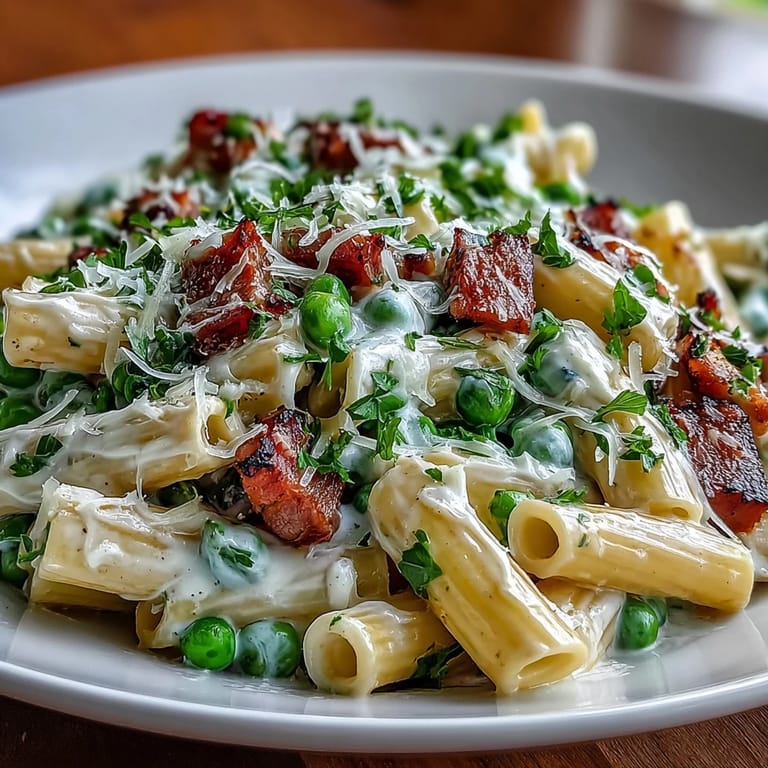
Save What I remember most about this dish is how my kitchen felt that first time—not fancy or stressful, just warm and smelling exactly like what people want when they're hungry and it's not quite summer yet. Cooking it became a reminder that comfort doesn't need to be complicated, and leftovers in the right combination are basically magic.
The Secret to Silky Sauce
The difference between a sauce that coats and clings versus one that feels watery or breaks comes down to patience and temperature. You want the cream to warm through gently, never at a hard boil, and the Parmesan to dissolve slowly into it rather than being shocked by too much heat all at once. I learned this the messy way, by rushing through the creaming step and ending up with something that looked more curdled than luxurious, and now I treat those minutes of gentle simmering like they matter, because they do.
When to Add the Pasta Water
There's an art to knowing when your sauce needs thinning, and it usually becomes obvious the moment you toss the hot pasta in—if you see it immediately cling and start to look gluey, that's your cue to add a splash of the starchy water. A tablespoon at a time is the way forward; you're looking for a sauce that flows gently and coats every piece rather than pooling at the bottom of the pan or disappearing entirely.
Variations and Flexibility
I've made this dish at least a dozen different ways depending on what's in my fridge, and it stays good through nearly all of them. Chicken works beautifully if ham isn't your thing, and I once added a handful of baby spinach that I had wilting in the crisper drawer, which turned it into something even more spring-like. For a lighter version without sacrificing taste, half-and-half does the job, though the sauce will be less voluptuous and more like something you'd eat on a Tuesday that doesn't feel indulgent.
 Save
Save This is the kind of dinner that makes you feel like you did something special without actually making you work very hard, and that's exactly when you know you've found something worth keeping. Make it this week if you have leftover ham in your fridge—your Tuesday self will thank you.
Recipe Questions & Answers
- → Can I use frozen peas instead of fresh?
Absolutely. Frozen peas work perfectly in this dish—just add them directly to the skillet and cook until heated through. They're often sweeter and more consistent than fresh peas depending on the season.
- → What's the best ham to use?
Leftover holiday ham or diced cooked ham works wonderfully. You can also use thick-cut deli ham or ham steaks cut into cubes. The salty richness of the ham balances beautifully with the sweet peas and creamy sauce.
- → Can I make this lighter?
Yes. Substitute half-and-half for the heavy cream for a lighter version while maintaining creaminess. You can also increase the peas and add sautéed asparagus or spinach to bulk up the vegetables.
- → What pasta shapes work best?
Penne is ideal because its ridges and hollow center catch the creamy sauce. Fusilli, rigatoni, or gemelli would also work well. Avoid long strands like spaghetti—the sauce won't cling as effectively.
- → How long do leftovers keep?
Store in an airtight container in the refrigerator for up to 3 days. Reheat gently with a splash of cream or pasta water to loosen the sauce, as it will thicken when chilled. The pasta may absorb more liquid over time.