 Save
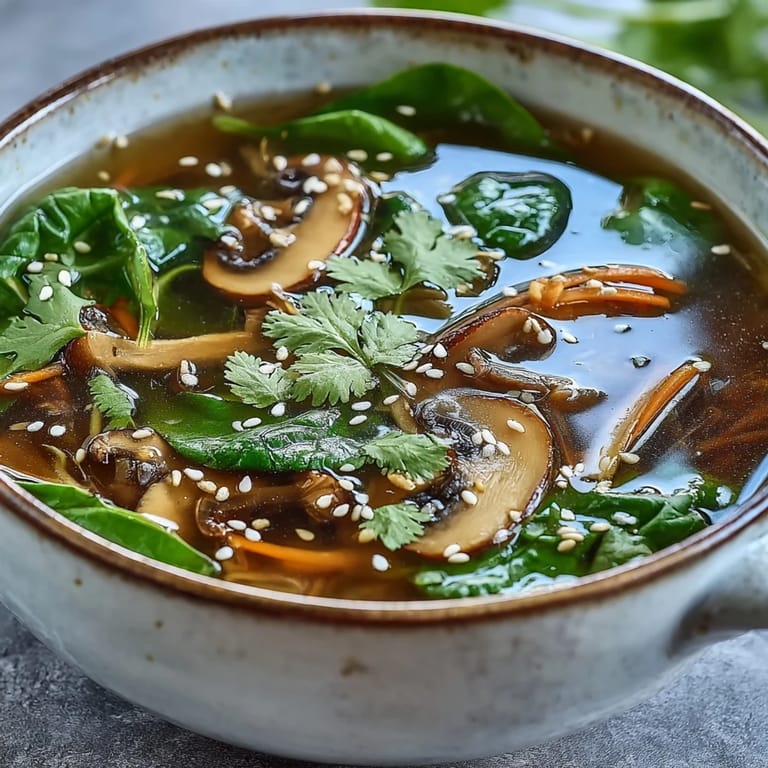
Save Miso Ginger Winter Soup is a light, restorative dish designed to provide comfort and nourishment during the cold months. Featuring warming fresh ginger and probiotic-rich miso, this soup combines nutrient-dense vegetables like shiitake mushrooms and bok choy in a savory, aromatic broth that is both healthy and deeply satisfying.
Save This Japanese-inspired soup is more than just a meal; it is a gentle way to reset your system. The infusion of ginger and garlic creates a base that is both fragrant and cleansing, while the addition of miso at the very end ensures you receive the maximum probiotic benefits of this fermented powerhouse.
Ingredients
Tired of Takeout? 🥡
Get 10 meals you can make faster than delivery arrives. Seriously.
One email. No spam. Unsubscribe anytime.
- 6 cups (1.5 L) low-sodium vegetable broth
- 2-inch (5 cm) piece fresh ginger, peeled and thinly sliced
- 2 cloves garlic, thinly sliced
- 2 tablespoons white or yellow miso paste
- 1 cup (100 g) shiitake mushrooms, thinly sliced
- 1 cup (60 g) baby spinach or bok choy, roughly chopped
- 1 medium carrot, julienned or thinly sliced
- 2 green onions, sliced
- 1 tablespoon toasted sesame seeds
- 1 tablespoon chopped fresh cilantro (optional)
- 1 teaspoon chili oil or a pinch of red pepper flakes (optional)
Instructions
- Step 1
- In a large saucepan, bring the vegetable broth to a gentle simmer over medium heat.
- Step 2
- Add the sliced ginger and garlic. Simmer for 10 minutes to infuse the broth.
- Step 3
- Add the mushrooms and carrot. Cook for 5 minutes until just tender.
- Step 4
- Remove a ladleful of hot broth and whisk with the miso paste in a small bowl until smooth.
- Step 5
- Reduce the soup heat to low. Stir the miso mixture back into the pot (do not boil after adding miso to preserve probiotics).
- Step 6
- Add the spinach or bok choy and green onions. Stir until wilted, about 1 minute.
- Step 7
- Taste and adjust seasoning with more miso or a splash of soy sauce if desired.
- Step 8
- Ladle into bowls and top with sesame seeds, cilantro, and chili oil or flakes if using.
Zusatztipps für die Zubereitung
To ensure the best flavor, use a large saucepan to allow the broth to simmer evenly. Preparation is simple with a cutting board and knife, and it is helpful to have a small bowl and whisk ready for blending the miso paste to avoid any lumps in your final broth.
Varianten und Anpassungen
Customize your bowl by adding cubed silken tofu for extra protein or soba or udon noodles for a heartier dish. You can also substitute the greens with kale or use red miso if you prefer a more robust and deeper savory flavor.
Serviervorschläge
Serve this soup hot, garnished with toasted sesame seeds and fresh cilantro. For an extra layer of warmth, drizzle with chili oil or add a pinch of red pepper flakes to suit your spice preference.
 Save
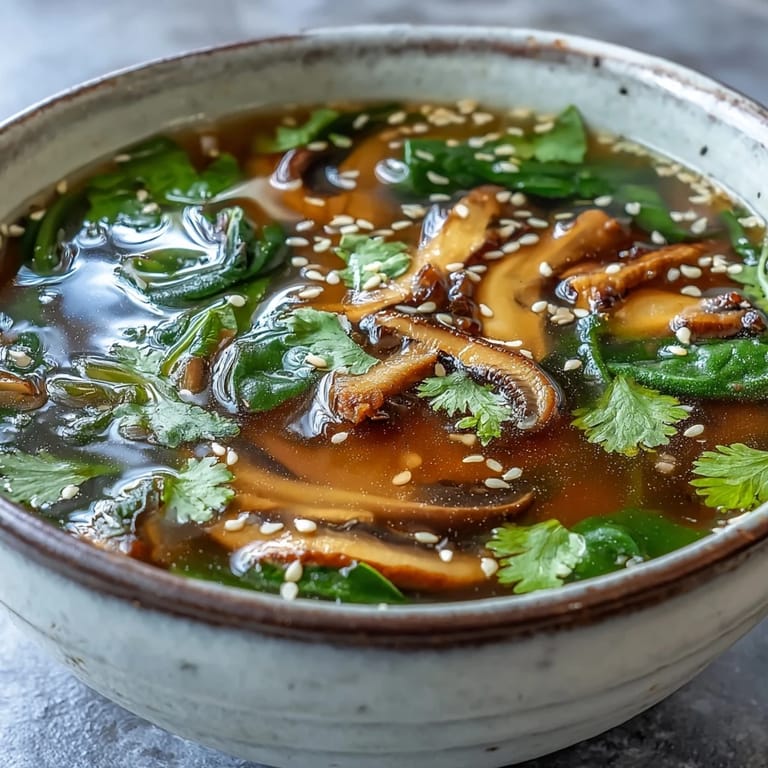
Save This Miso Ginger Winter Soup is an easy, elegant way to stay warm and healthy. Whether served as a light lunch or a restorative starter, its vibrant vegetables and savory broth are sure to make it a winter staple in your kitchen.
Recipe Questions & Answers
- → Can I use red miso instead of white miso?
Yes, red miso works beautifully and provides a deeper, more robust flavor. It has a stronger, saltier taste than white or yellow miso, so you may want to start with slightly less and adjust to taste.
- → How do I store leftover miso ginger soup?
Store in an airtight container in the refrigerator for up to 3 days. Reheat gently over low heat, avoiding boiling to preserve the miso's probiotic benefits. The vegetables may soften further upon reheating.
- → Can I add protein to this soup?
Absolutely. Cubed silken tofu is an excellent addition that complements the Japanese-inspired flavors. You can also add cooked edamame, tempeh, or even a soft-boiled egg for extra protein and substance.
- → Why shouldn't I boil the soup after adding miso?
Boiling destroys the beneficial probiotics and enzymes in miso paste. To preserve these health benefits, always add miso at the end of cooking and keep the heat low, just warming it through without bringing it to a boil.
- → What can I substitute for shiitake mushrooms?
Button mushrooms, cremini, or oyster mushrooms all work well. Shiitakes provide a deeper umami flavor, but any fresh mushroom variety will add nice texture and earthiness to the broth.
- → How can I make this soup more filling?
Add cooked soba or udon noodles for a heartier meal. You can also increase the amount of tofu, add more vegetables like cubed sweet potato or daikon radish, or serve alongside steamed rice.