 Save
Save My coworker Sarah brought a Korean beef bowl to lunch one Tuesday, and I watched her eat it with this quiet satisfaction while I picked at my sad desk salad. The way those bright vegetables contrasted with the glossy, savory beef made me realize I'd been missing out on something genuinely delicious and, somehow, easier to make than I'd imagined. Three weeks later, I had all the ingredients lined up on my counter, ready to prove to myself that I could pull this off.
I made this for my sister's birthday dinner when she was going through a phase of wanting to eat healthier, and she surprised me by asking for the recipe before she even finished the bowl. That moment when someone you love asks how to make something you cooked for them hits different. Now it's become our go-to meal when we're catching up at her place.
Ingredients
- Ground beef (1 lb): Lean ground beef won't leave you with a pool of grease, but don't go too lean or it'll taste dry and sad.
- Gochujang (2 tbsp): This Korean chili paste is the whole personality of the dish, so find a real one in the Asian foods aisle and don't substitute.
- Soy sauce (2 tbsp): Use regular soy sauce here, not the fancy tamari unless you need gluten-free.
- Brown sugar (1 tbsp): This balances the heat and saltiness in a way that feels almost magical.
- Garlic and ginger (2 cloves and 1 tbsp minced): Fresh is non-negotiable; the smell when these hit the oil sets the tone for everything.
- Toasted sesame oil (1 tbsp): Buy it in small bottles because a little goes a long way, and it's liquid gold.
- Green onions (2 total): Split these between cooking and garnishing so you get brightness in every bite.
- Short-grain rice (4 cups cooked): White rice is traditional, but brown rice works if that's what you prefer.
- Edamame (1 cup): Frozen and shelled is perfectly fine and honestly more convenient.
- Cucumber (1 cup sliced): Keep these cold and slice them just before serving so they stay crisp.
- Carrot (1 cup julienned): Use a vegetable peeler if you don't have a julienne tool; thin ribbons do the job beautifully.
- Kimchi (1 cup chopped): This tangy, spicy element is where the bowl gets its soul.
- Toasted sesame seeds (2 tbsp): The final sprinkle that makes everyone think you really know what you're doing.
Tired of Takeout? 🥡
Get 10 meals you can make faster than delivery arrives. Seriously.
One email. No spam. Unsubscribe anytime.
Instructions
- Get your aromatics ready:
- Heat sesame oil in a large skillet over medium heat and watch it shimmer before adding minced garlic and ginger. Let them sizzle for about a minute until your kitchen smells like you mean business.
- Brown the beef:
- Add ground beef and break it apart with a spatula as it cooks, about 5 to 6 minutes until it's no longer pink and looks nicely caramelized. Don't crowd it; let it have room to brown instead of steam.
- Build the sauce:
- Stir in gochujang, soy sauce, and brown sugar, and let it all bubble together for 2 to 3 minutes until the sauce coats the beef with a glossy finish. You'll know it's right when it stops looking watery and clings to every piece.
- Finish with green onions:
- Pull the skillet off heat and fold in half of the sliced green onions for a fresh note.
- Build your bowls:
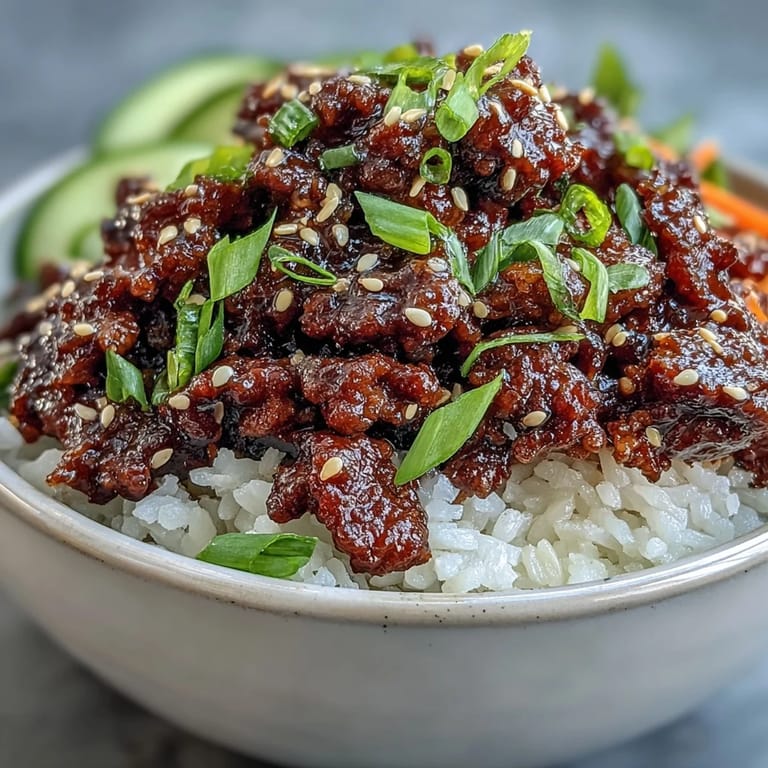
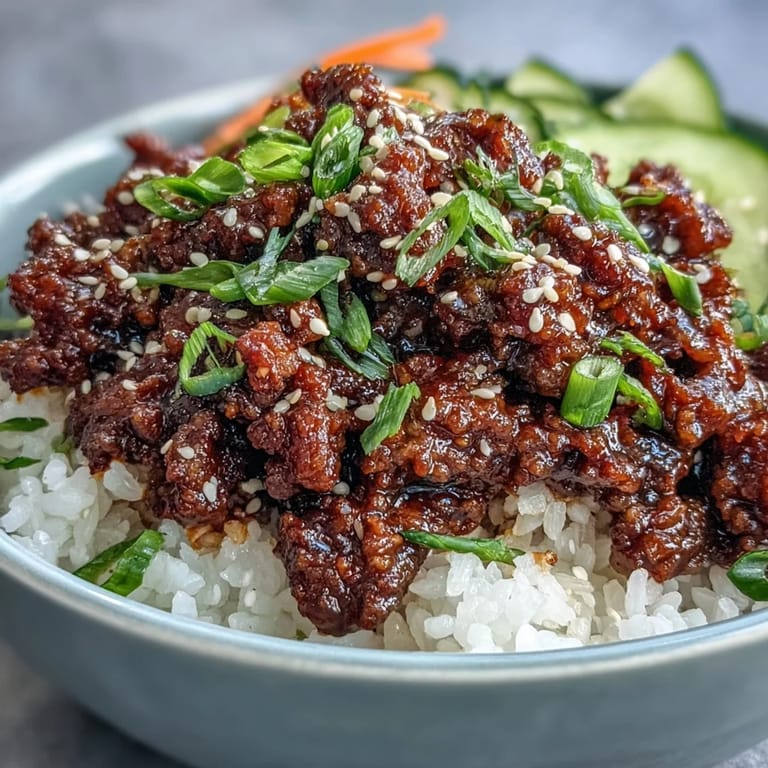
- Divide rice among four bowls, then top each with the beef mixture, edamame, cucumber, carrot, and kimchi in whatever arrangement makes you happy. There's no wrong way to layer this.
- Garnish and serve:
- Sprinkle the remaining green onions and sesame seeds over everything and eat while the beef is still warm and the vegetables are still cool.
 Save
Save There's something about assembling these bowls that feels meditative, almost like a small act of care even when you're just cooking for yourself. Every time I make it, I get a little more confident about the proportions and less worried about making it perfect.
Why This Dish Became My Weeknight Favorite
The first time I made this, I was nervous about the gochujang because I'd never cooked with it before, but the moment it hit the beef and released that deep, savory warmth, I knew I'd found something that would stick around. It's the kind of recipe that makes you feel capable without demanding much from you.
The Beauty of Building Your Own Bowl
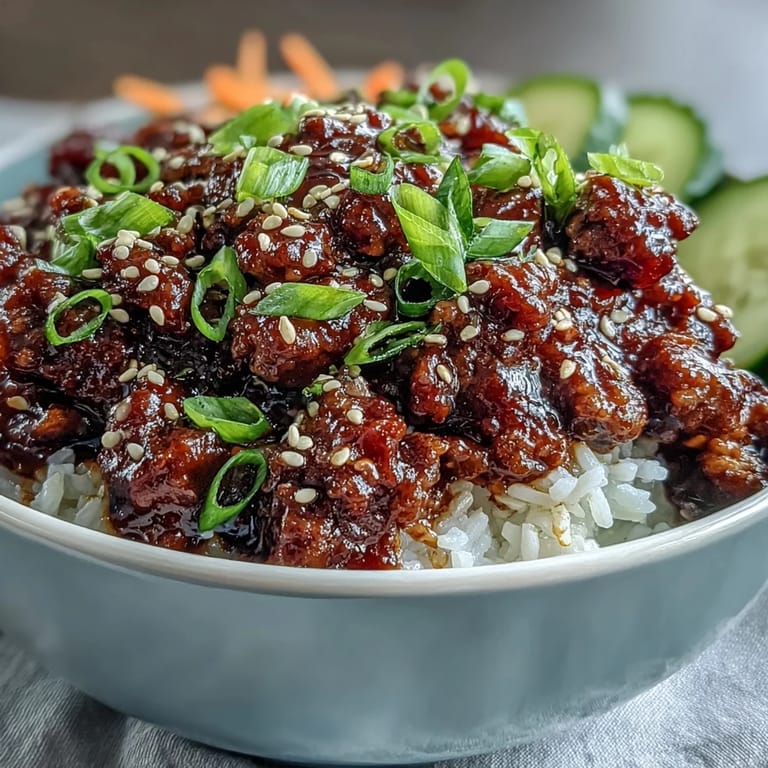
One of the best things about this dish is that everyone gets to decide what their bowl looks like, which sounds small but actually matters when you're eating. My partner loads his with extra kimchi and goes light on cucumber, while I pile on the edamame and sesame seeds. It's dinner and a little moment of autonomy at the same time.
Simple Swaps That Actually Work
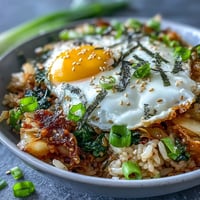
Ground turkey or chicken moves through the same timeline and takes the sauce just as well as beef, so don't feel locked into one protein. If you want to add a fried egg on top, the yolk breaking into the warm rice and sauce is genuinely worth the extra minute it takes to cook. For vegetables, swap out the cucumber for shredded cabbage or add thin-sliced radish if you want more crunch.
- If you can't find kimchi, a quick pickle of cucumber and vinegar works in a pinch.
- Make double the beef mixture and freeze half for nights when you're too tired to cook.
- Leftovers taste even better the next day once the flavors have settled together.
 Save
Save This bowl has quietly become one of those recipes I reach for when I want to feel like I'm taking care of myself, and that's when you know something is a keeper. Make it once, and I promise you'll make it again.
Recipe Questions & Answers
- → What does gochujang taste like?
Gochujang is a Korean chili paste with a complex flavor profile—sweet, savory, and mildly spicy with fermented undertones. It adds depth and a beautiful red color to the beef.
- → Can I make this dish spicy?
Absolutely. Increase the gochujang to 3 tablespoons for more heat, or add Korean chili flakes gochugaru. You can also serve with extra kimchi on the side.
- → What rice works best?
Short-grain white or brown rice is ideal for its sticky texture, which helps scoop up the seasoned beef. Jasmine rice works too if that's what you have on hand.
- → Can I prep this ahead?
The beef mixture stores well in the refrigerator for up to 3 days. Reheat gently and assemble bowls fresh. You can also pre-cut vegetables for quicker assembly.
- → Is this gluten-free?
Traditional soy sauce contains gluten, but you can substitute with gluten-free tamari to make this bowl gluten-free. Always check your gochujang label as well.