 Save
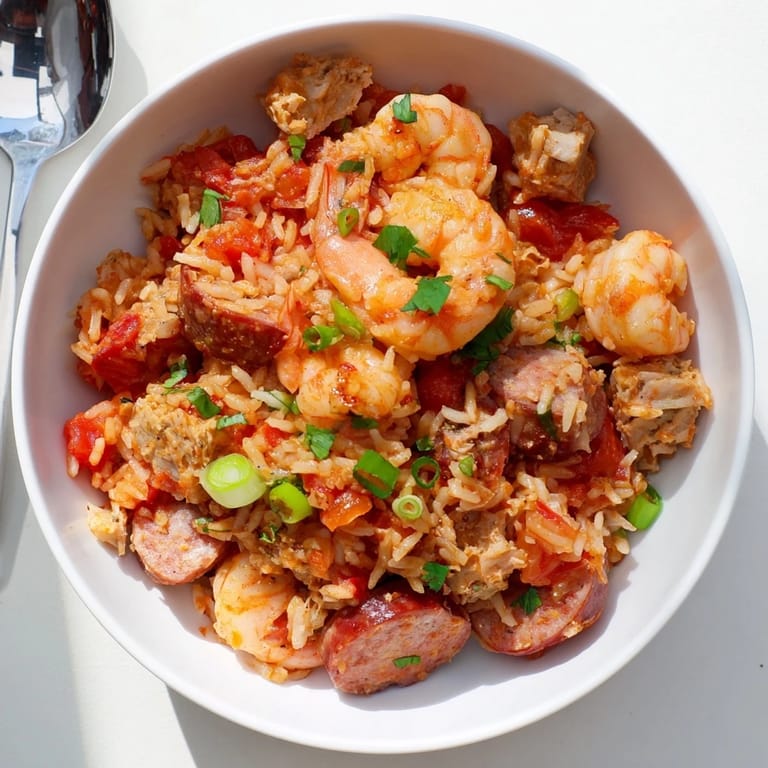
Save The aroma hitting me when I walked through my friend Ruby's door in New Orleans stopped me cold. Her kitchen hummed with jazz on the radio and something incredible bubbling on the stove. That first spoonful changed everything I thought about rice dishes. The layers of flavor kept revealing themselves, smoky then spicy then rich.
Ruby laughed watching me hover around her stove, asking questions about every step. She told me jambalaya is about patience and trust. Let the rice absorb all those flavors. Let the shrimp cook just until they turn pink. That afternoon, stirring the pot with her wooden spoon, I understood why this dish brings people together.
Ingredients
- 225 g (8 oz) andouille sausage, sliced: This smoked sausage is the backbone of the dish, infusing every grain of rice with its distinctive smoky depth
- 2 boneless skinless chicken thighs (about 250 g/9 oz), cut into 2 cm (1-inch) pieces: Thighs stay tender during simmering and add richness that breast meat cannot provide
- 225 g (8 oz) large raw shrimp, peeled and deveined: Add these at the very end so they cook through delicate and sweet, never rubbery
- 1 medium onion, diced: Sweet yellow onions work best here, caramelizing slightly as they cook down
- 1 green bell pepper, diced: Look for peppers with firm, shiny skin and no soft spots
- 2 celery stalks, diced: Use fresh, crisp celery including some of the inner lighter stalks for better flavor
- 3 garlic cloves, minced: Fresh garlic only, never the jarred stuff which can taste bitter
- 1 can (400 g/14 oz) diced tomatoes with juices: Fire-roasted tomatoes add an extra layer of depth if you can find them
- 2 spring onions, sliced (for garnish): These add a fresh sharp bite that cuts through the richness
- 2 tbsp fresh parsley, chopped (for garnish): Flat-leaf parsley has more flavor than the curly variety
- 300 g (1½ cups) long-grain white rice, rinsed: Rinse until water runs clear to remove excess starch
- 720 ml (3 cups) chicken broth: Low-sodium broth lets you control the seasoning better
- 1½ tsp smoked paprika: This is non-negotiable for authentic smoky depth
- 1 tsp dried thyme: Thyme bridges the gap between the savory and spicy elements
- 1 tsp dried oregano: Mediterranean oregano has a milder flavor than Mexican varieties
- 1 tsp cayenne pepper (adjust to taste): Start with less if you are sensitive to heat
- ½ tsp ground black pepper: Freshly cracked pepper makes a noticeable difference
- 1 tsp salt (plus more to taste): You will likely need to adjust seasoning at the end
- 2 bay leaves: Remove them before serving since they remain tough even after long cooking
- 2 tbsp vegetable oil: Divide this between browning the meat and sauteing the vegetables
- Hot sauce, to serve (optional): Crystal or Tabasco are traditional choices
Tired of Takeout? 🥡
Get 10 meals you can make faster than delivery arrives. Seriously.
One email. No spam. Unsubscribe anytime.
Instructions
- Brown the andouille first:
- Heat 1 tablespoon oil in a large heavy-bottomed pot or Dutch oven over medium-high heat. Add sausage and cook until lightly browned, about 3–4 minutes. Remove sausage and set aside.
- Sear the chicken pieces:
- Add remaining oil to the pot. Season chicken pieces with a pinch of salt and pepper. Add to the pot and brown on all sides, about 4–5 minutes. Remove and set aside with sausage.
- Build the flavor foundation:
- Add onion, bell pepper, and celery to the pot. Cook, stirring, until softened, about 5 minutes. Add garlic and cook for 1 minute more.
- Toast the spices:
- Stir in rice, smoked paprika, thyme, oregano, cayenne, black pepper, and salt. Cook for 1 minute to toast spices.
- Add the liquids and tomatoes:
- Add diced tomatoes (with juices), chicken broth, and bay leaves. Stir well, scraping up any browned bits from the bottom.
- Simmer the rice:
- Return sausage and chicken to the pot. Bring to a boil, then reduce heat to low. Cover and simmer for 20 minutes, stirring once halfway through.
- Add the shrimp:
- Nestle shrimp into the rice. Cover and cook for 5–7 minutes, until shrimp are pink and cooked through and rice is tender.
- Finish and serve:
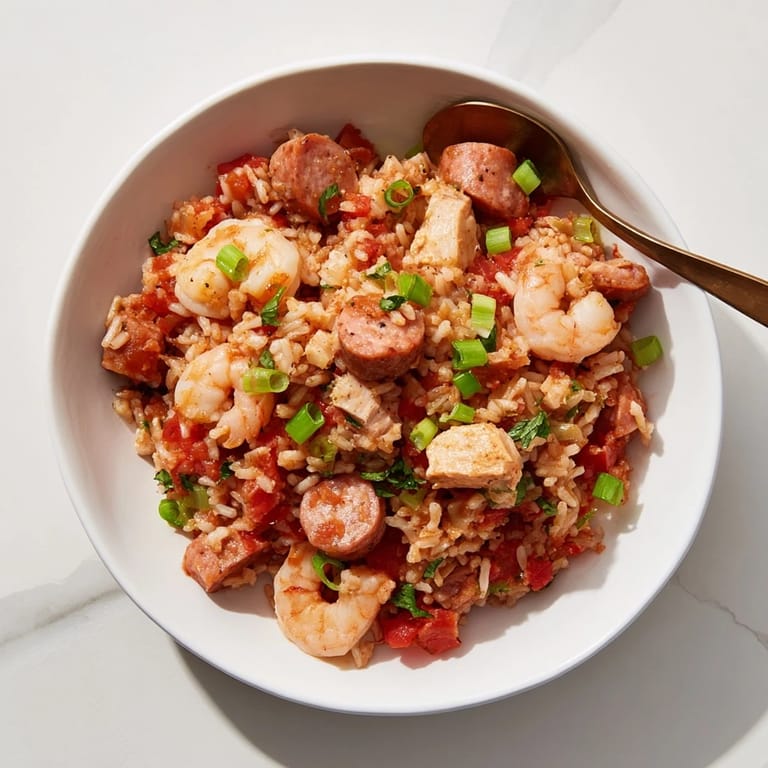
- Remove from heat. Discard bay leaves. Fluff jambalaya with a fork. Garnish with spring onions and parsley. Serve hot, with hot sauce on the side if desired.
 Save
Save Last winter, my neighbor texted me at 7 PM saying she smelled something incredible drifting through the building vents. She ended up staying for dinner, and we sat at my tiny table eating jambalaya while she told me about her childhood in Mobile. Food does that, brings people together and starts conversations.
Getting The Rice Right
The difference between decent jambalaya and great jambalaya comes down to the rice texture. Long-grain white rice holds its shape better than short-grain varieties. I learned through trial and error that stirring too frequently breaks the grains and releases excess starch, making the dish gluey instead of fluffy.
Building Layers Of Flavor
Browning the meat separately before adding it back later creates those caramelized bits on the bottom of the pot. When you deglaze with the broth, those bits dissolve back into the liquid, creating depth. This step takes extra time but makes the difference between one-note flavor and complex satisfaction.
Making It Your Own
Ruby always said jambalaya is a improvisational dish. If you do not eat shrimp, add more chicken or some cubed ham. Vegetarians can use plant-based sausage and vegetable broth, adding extra bell peppers and mushrooms for body. The heart of the dish is the technique, not the exact ingredients.
- Try adding a can of red kidney beans along with the tomatoes for extra protein and texture
- A splash of Worcestershire sauce deepens the umami notes without adding detectable flavor
- Make a double batch and freeze portions for busy weeknights
 Save
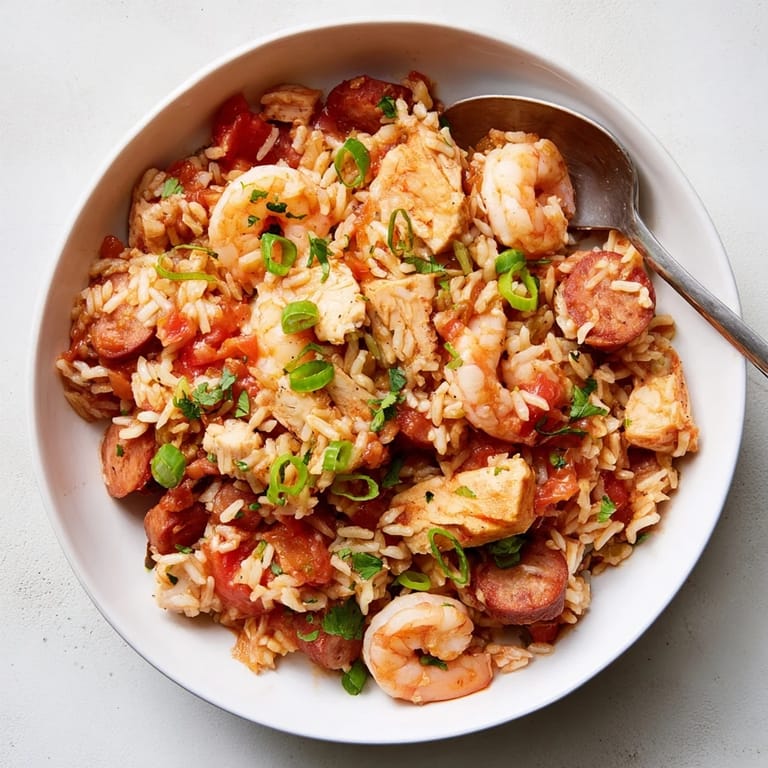
Save Scoop generous portions into bowls and pass the hot sauce around. Listen to the jazz station Ruby turned me onto that day. Enjoy the moment.
Recipe Questions & Answers
- → What makes jambalaya different from other rice dishes?
Jambalaya is distinct because the rice cooks directly in the pot with all ingredients, absorbing the flavors from the proteins, vegetables, and spices. Unlike pilaf or risotto, it uses a specific Creole spice blend and the 'holy trinity' of onion, bell pepper, and celery as its flavor foundation.
- → Can I make jambalaya ahead of time?
Yes, jambalaya actually tastes better the next day as flavors continue to meld. Store in an airtight container in the refrigerator for up to 3 days. Reheat gently with a splash of broth to maintain moisture, though the rice will continue to absorb liquid.
- → What's the best rice for jambalaya?
Long-grain white rice is traditional because it stays separate and fluffy during cooking. Converted or parboiled rice also works well as it holds up better to longer simmering. Avoid short-grain or Arborio rice, which becomes too creamy.
- → How spicy is traditional jambalaya?
Authentic jambalaya has moderate heat from cayenne pepper and Cajun spices, but it's not overwhelmingly spicy. The heat level can be easily adjusted by reducing or increasing the cayenne. Serve with hot sauce on the side so diners can customize their spice preference.
- → Can I substitute the proteins?
Absolutely. You can use smoked kielbasa or chorizo instead of andouille sausage. For the chicken, thighs work best for flavor and texture, but breast meat can be used. The shrimp can be omitted entirely or replaced with crawfish for a more traditional Louisiana variation.
- → Why do you cook the proteins separately first?
Browning the sausage and chicken separately develops flavor through the Maillard reaction, creating caramelized bits on the bottom of the pot. This fond adds depth to the dish and gets scraped up when deglazing with broth, enhancing the overall flavor profile.