 Save
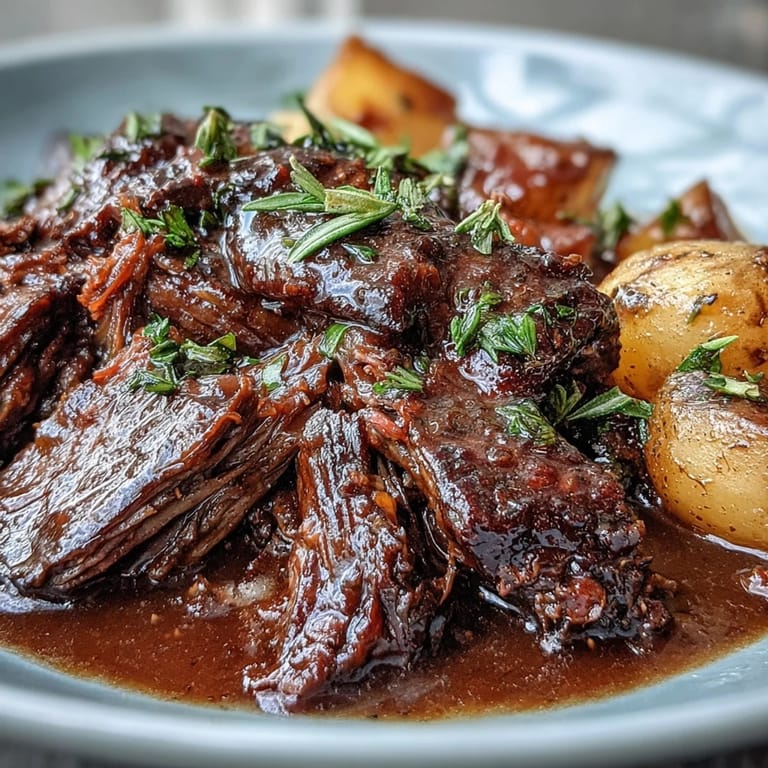
Save The smell of caramelized onions and seared beef can stop me in my tracks no matter where I am in the house. One Sunday afternoon, I decided to finally make a proper pot roast after years of claiming I didn't have time for it. The kitchen steamed up, the windows fogged over, and by the time I pulled that Dutch oven out of the oven three hours later, I understood what all the fuss was about. It wasn't just dinner, it was the kind of meal that makes you want to sit at the table longer than usual.
I made this for my neighbors once during a snowstorm when the power kept flickering and we all ended up at my place with candles and blankets. The pot roast stayed warm on the stove, and we ate straight out of bowls with crusty bread torn into chunks. Nobody wanted to leave, even after the lights came back on.
Ingredients
- Beef chuck roast or blade roast (3 to 3.5 lb): Look for marbling throughout, the fat breaks down during the long braise and keeps everything moist and flavorful.
- Kosher salt (1 ½ tsp plus more) and black pepper (1 tsp): Season generously before searing so the crust develops properly and the seasoning penetrates as it cooks.
- All-purpose flour (2 tbsp): A light dusting before searing helps create a gorgeous crust and adds body to the final gravy.
- Olive oil or vegetable oil (3 tbsp divided) and unsalted butter (1 tbsp): The combination gives you a higher smoke point and rich flavor for that initial sear.
- Yellow onion (1 large, in thick wedges): Wedges hold their shape better than diced onion and turn sweet and jammy in the braising liquid.
- Garlic (4 cloves, smashed and peeled): Smashing releases more flavor than mincing and the cloves soften into the sauce beautifully.
- Carrots (4 medium, in 2-inch chunks): Cut them large so they don't turn to mush, they should be tender but still have some bite.
- Celery (3 ribs, in 2-inch chunks): Adds a subtle aromatic backbone that you don't taste directly but would miss if it weren't there.
- Baby potatoes (1 ½ lb, whole or halved): Waxy potatoes hold up better than russets and soak up the gravy without falling apart.
- Tomato paste (2 tbsp): Cooking it down for a minute or two deepens the flavor and adds umami richness to the sauce.
- Dry red wine (1 cup): Use something you'd drink, not cooking wine, it deglazes the pan and adds complexity you can't get any other way.
- Low-sodium beef broth (2 ½ cups): Low-sodium lets you control the salt level as the liquid reduces and concentrates.
- Worcestershire sauce (1 tsp): Just a splash adds a savory depth that ties everything together without being identifiable.
- Fresh rosemary (2 sprigs) and fresh thyme (3 sprigs): Fresh herbs release their oils slowly over the long cook, dried works too but use less.
- Bay leaves (2): They add a subtle earthiness that rounds out the broth, just remember to fish them out before serving.
- Cornstarch slurry (1 ½ tbsp cornstarch mixed with 2 tbsp cold water, optional): If you like a thicker gravy, this does the job without adding flour taste.
- Fresh parsley (for garnish, optional): A handful of chopped parsley at the end brightens the whole dish and adds a pop of color.
Tired of Takeout? 🥡
Get 10 meals you can make faster than delivery arrives. Seriously.
One email. No spam. Unsubscribe anytime.
Instructions
- Preheat and Prep:
- Set your oven to 300°F if you're going the oven route. Pat the roast completely dry with paper towels, moisture is the enemy of a good sear, then season it all over with salt and pepper and dust lightly with flour.
- Sear the Beef:
- Heat 2 tablespoons of oil and the butter in a heavy pot or Dutch oven over medium-high heat until shimmering. Lay the roast in gently and let it sit undisturbed for 4 to 5 minutes per side until a deep brown crust forms, don't forget the edges.
- Cook the Aromatics:
- Pull the roast out and set it aside, then lower the heat to medium and toss in the onion wedges. Let them soften and turn golden for 3 to 4 minutes, then add the garlic and cook just until you can smell it, about 30 seconds to a minute.
- Build the Base:
- Stir in the tomato paste and cook for a minute or two until it darkens and smells sweet. Pour in the red wine and scrape up all those browned bits stuck to the bottom, let it simmer and reduce slightly for 2 to 3 minutes.
- Add Liquid and Herbs:
- Pour in the beef broth and Worcestershire sauce, stirring to combine. Toss in the rosemary, thyme, and bay leaves, then nestle the roast back into the pot along with any juices that collected on the plate.
- Braise Low and Slow:
- Bring everything to a gentle simmer, cover the pot tightly, and either reduce the heat to low or slide it into the oven. Let it cook undisturbed for 1 ½ hours.
- Add Vegetables:
- After the first hour and a half, flip the roast over carefully. Tuck the carrots, celery, and potatoes around the meat, pushing them into the liquid, then cover again and cook for another 1 ½ to 2 hours until the beef is fork-tender and the vegetables are soft but intact.
- Rest and Thicken:
- Transfer the roast and vegetables to a platter and tent with foil. Skim off any excess fat floating on top of the liquid, then if you want a thicker gravy, bring it to a simmer and whisk in the cornstarch slurry, cooking for 2 to 3 minutes until it coats the back of a spoon.
- Finish and Serve:
- Pull out the herb stems and bay leaves. Shred the beef into large chunks or slice it against the grain, then either return it to the pot or arrange it over the vegetables and spoon the sauce generously on top, finishing with a sprinkle of fresh parsley if you like.
 Save
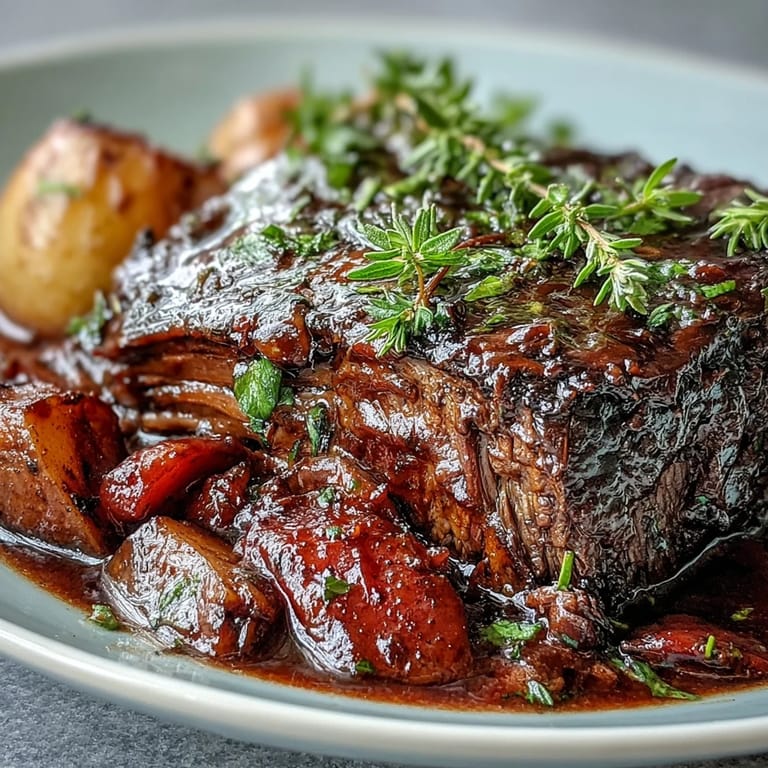
Save The first time I served this to my dad, he went quiet halfway through his first bite, then looked up and said it reminded him of Sunday dinners at his grandmother's house. I hadn't been trying to recreate anything specific, but somehow slow-cooked beef in a pot has a way of tasting like home no matter whose kitchen you're in.
How to Choose the Right Cut
Chuck roast is your best friend here because it has enough fat and connective tissue to break down into tenderness over the long braise. Blade roast works beautifully too, and if you see a piece with good marbling and a little fat cap on one side, grab it. Lean cuts like sirloin or round will turn tough and dry no matter how long you cook them, so save those for quicker methods.
Stovetop vs Oven vs Slow Cooker
I usually go with the oven because the heat surrounds the pot evenly and I don't have to worry about hot spots. Stovetop works fine if you keep the heat very low and check on it occasionally to make sure it's not boiling. Slow cookers are great for hands-off cooking, just sear everything first, then set it on low for 8 to 10 hours or high for 5 to 6, adding the vegetables halfway through if you want them to hold their shape.
Storing and Reheating Leftovers
Leftovers keep in the fridge for up to four days in an airtight container, and the flavors deepen overnight as everything sits in that gravy. Reheat gently on the stovetop over low heat, adding a splash of broth if the sauce has thickened too much. You can also freeze portions for up to three months, just thaw in the fridge overnight before reheating.
- Use leftover pot roast for sandwiches on crusty rolls with a smear of horseradish.
- Shred the beef and toss it into tacos with pickled onions and cilantro.
- Serve it over creamy polenta or buttered egg noodles for an easy weeknight dinner.
 Save
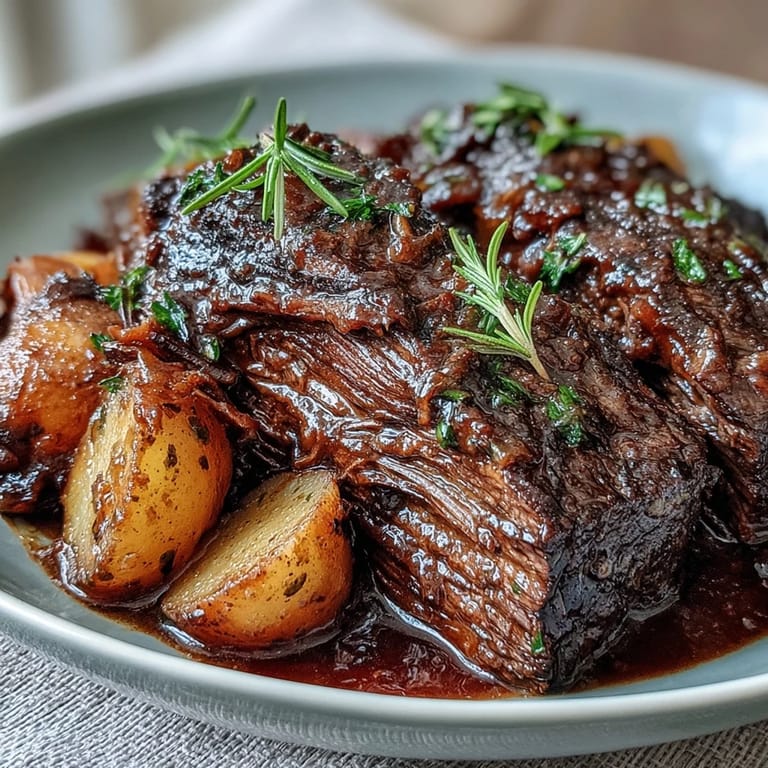
Save This is the kind of meal that makes your whole house smell like someone's been cooking all day, because you have. Serve it with good bread, pour yourself a glass of whatever you cooked with, and enjoy every slow, savory bite.
Recipe Questions & Answers
- → What cut of beef works best for pot roast?
Chuck roast or blade roast are ideal choices because they have plenty of marbling and connective tissue. As the meat slow-cooks, this breaks down into gelatin, creating incredibly tender, succulent beef that falls apart easily.
- → How long does it take to make pot roast?
Total cooking time is about 3 to 3.5 hours. The beef braises for 1.5 hours before adding vegetables, then cooks another 1.5 to 2 hours until everything is fork-tender. Plan about 40 minutes for prep and searing.
- → Can I make this in a slow cooker?
Absolutely. After searing the beef and aromatics, transfer everything to your slow cooker. Cook on low for 8-10 hours or high for 5-6 hours. Add vegetables halfway through cooking to prevent them from becoming too soft.
- → What can I use instead of red wine?
Replace the wine with additional beef broth or a combination of broth and balsamic vinegar. The wine adds depth and acidity, but beef broth alone still creates a delicious, rich gravy.
- → How do I get thicker gravy?
After removing the beef and vegetables, simmer the cooking liquid and stir in a cornstarch slurry (cornstarch mixed with cold water). Cook for 2-3 minutes until it reaches your desired consistency, adding more broth if needed.
- → What sides pair well with pot roast?
Mashed potatoes are classic for soaking up the gravy. Crusty bread, buttered egg noodles, or creamy polenta also work beautifully. A simple green salad or roasted green beans balances the richness.