 Save
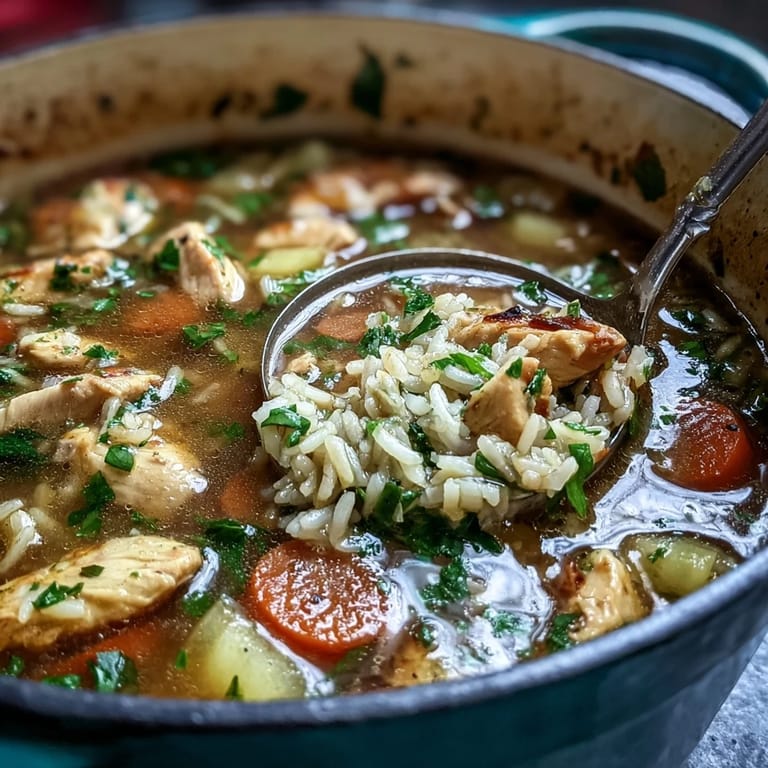
Save There's something about a one-pot soup that stops me mid-week chaos and reminds me why I cook. My neighbor knocked on the door one rainy Tuesday with her kids, and I had exactly these ingredients on hand—chicken, rice, the usual suspects in my crisper drawer. Twenty minutes later, we were all around the table with steaming bowls, and suddenly the afternoon felt less rushed. That's when I realized this soup had become my quiet answer to almost everything.
I made this the morning my daughter was sick, and she asked for it three days straight. There's comfort in how the vegetables soften into the broth, how the chicken shreds just by looking at it, and how a squeeze of lemon at the end makes everything taste like home. Watching someone heal while eating something you made from your pantry—that's the real magic here.
Ingredients
- Boneless, skinless chicken breasts (about 400 g, cut into bite-sized pieces): Smaller pieces cook faster and distribute evenly throughout the pot, so you get chicken in every spoonful without having to hunt for it.
- Medium onion, finely chopped: This is your flavor foundation; the finer you chop it, the more it melts into the broth and becomes almost invisible while making everything taste better.
- Carrots and celery stalks, sliced: They're not just supporting players—they sweeten the broth as they cook and give the soup that classic, grounded feeling.
- Garlic cloves, minced: Three cloves feels like the sweet spot; any fewer and you lose that aromatic lift, any more and it can overpower the delicate balance.
- Long-grain white rice, rinsed (2/3 cup or 120 g): Rinsing removes the starch, which keeps your broth clear and the rice from turning mushy; this one step changed everything for me.
- Low-sodium chicken broth (6 cups or 1.5 liters): Low-sodium lets you control the salt and taste the actual chicken, not just salt; it's worth seeking out.
- Olive oil or unsalted butter: Either works beautifully; I reach for olive oil on weeknights and butter when I want that richer, roasted vegetable flavor.
- Dried thyme, bay leaf, black pepper, and salt: These seasonings are restrained on purpose—this soup is about clarity of flavor, not heavy-handedness.
- Fresh parsley and lemon wedges: The parsley brightens everything at the last second, and lemon is optional until you taste it and realize you can't imagine serving this without it.
Tired of Takeout? 🥡
Get 10 meals you can make faster than delivery arrives. Seriously.
One email. No spam. Unsubscribe anytime.
Instructions
- Warm your pot and build the base:
- Heat the oil or butter over medium heat and add the onion, carrots, and celery together—the pot should sound gentle and inviting as they hit the heat. Stir occasionally for about 5 minutes, until the onion turns translucent and you can smell the vegetables beginning to wake up.
- Invite the garlic:
- Add the minced garlic and let it cook for exactly 1 minute; you'll notice the kitchen smells like someone's about to make something worth eating. Don't let it brown or it'll turn bitter on you.
- Sear the chicken lightly:
- Stir in your chicken pieces and cook for 2 to 3 minutes, just until the outside loses its raw look—they'll finish cooking in the broth, so don't worry about them being done. This quick sear adds a whisper of color and flavor that makes a difference.
- Combine everything into a symphony:
- Add the rinsed rice, chicken broth, thyme, bay leaf, salt, and pepper all at once, stirring gently to make sure nothing sticks to the bottom. Everything should feel calm and even in the pot before you turn up the heat.
- Bring to life, then settle down:
- Let it come to a boil—you'll see the surface ripple and steam rise—then immediately lower the heat to a simmer and cover the pot. Stir every few minutes if you're nearby, for 20 to 25 minutes, until the rice is tender and the chicken is cooked through; you'll know it's ready when a grain of rice dissolves between your fingers.
- Polish and finish:
- Remove the bay leaf (it did its job), taste the soup, and adjust the salt and pepper to your preference. Stir in the fresh parsley, ladle into bowls, and set out lemon wedges for anyone who wants that final brightness.
 Save
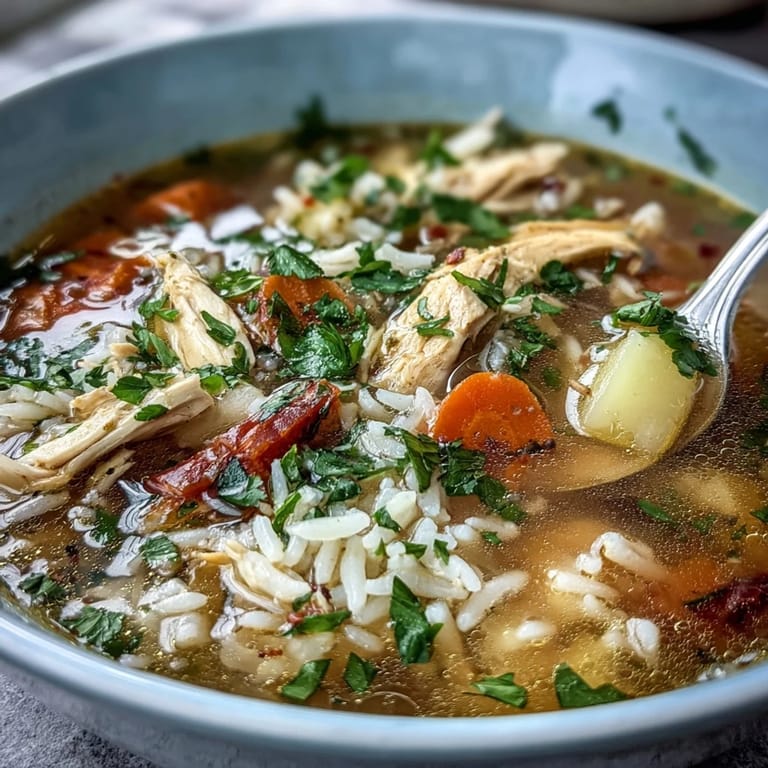
Save My son once asked why this soup tasted different from the canned version he'd had at school, and I realized I couldn't quite explain it—only that homemade broth, vegetables cut by your own hand, and chicken you chose yourself add up to something that feeds you differently. This recipe became proof that the simplest meals often matter the most.
Why This Soup Feels Timeless
Chicken and rice soup exists in almost every cuisine because it works: it's honest, forgiving, and adapts to what you have on hand. I've made it with leftover rotisserie chicken when I was pressed for time, with brown rice when I wanted more texture, and with whatever vegetables were lingering in my crisper. The structure holds, and the comfort never wavers.
The Art of Seasoning as You Go
This soup teaches you something important about salt and pepper: they're not afterthoughts but active ingredients that need your attention. I used to add everything upfront and hope it worked out, but now I taste the broth when the rice is halfway done, again when it's nearly tender, and once more before the parsley goes in. Each time, I adjust slightly, and the final bowl tastes balanced and alive instead of flat.
Room to Play and Make It Yours
This recipe is a foundation, not a prison—I've added spinach in winter, swapped in pearl barley, stirred in a parmesan rind while it simmered for deeper flavor. The bones of the dish are strong enough to handle your creativity without falling apart. Here's what I've learned works beautifully:
- Brown rice needs about 45 minutes total cooking time instead of 25, so add it with the broth and give it the extra time it craves.
- Fresh greens like spinach or kale go in during the last 5 minutes so they stay vibrant green and don't turn into sad, gray nothing.
- A parmesan rind simmered alongside everything adds an umami depth that makes people ask what your secret is, and you can smile knowing it's just one ingredient they overlooked.
 Save
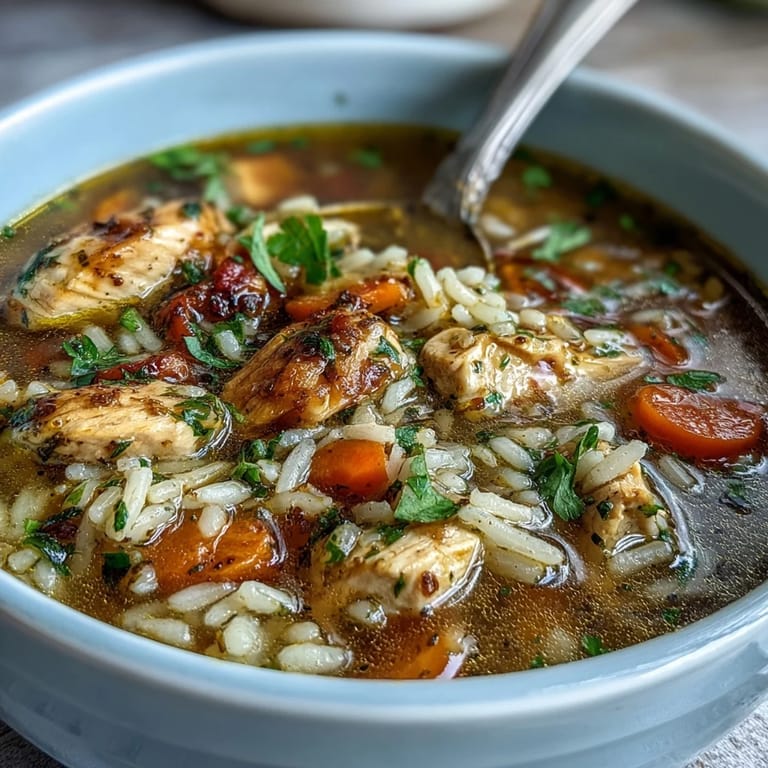
Save This soup has fed my family through ordinary Tuesdays and extraordinary storms, and it never once asked for anything complicated in return. Make it, taste it, add your lemon, and let it do what it does best.
Recipe Questions & Answers
- → Can I use brown rice instead of white rice?
Yes, brown rice can be substituted, but increase simmering time by 15–20 minutes to ensure it cooks fully and absorbs flavors well.
- → How can I add more greens to the dish?
Adding spinach or kale during the last 5 minutes of cooking is a great way to incorporate extra fresh greens without overcooking them.
- → What can I use instead of chicken broth?
Vegetable broth makes a suitable alternative and keeps the dish light and flavorful while maintaining its comforting qualities.
- → Is it possible to prepare this in advance?
Yes, leftovers can be refrigerated; the mixture thickens as rice absorbs liquid. Add extra broth when reheating to restore desired texture.
- → How to enhance flavor further during cooking?
Including a Parmesan rind while simmering infuses a subtle umami depth, which should be removed before serving.